


Standard
Schnoodle
An adaptable size label, not a standard personality. Understand the medium-to-larger Schnoodle and plan for movement, manners and everyday comfort.
Schnauzer × Poodle. Many possibilities. One individual dog.
What does
this size mean?
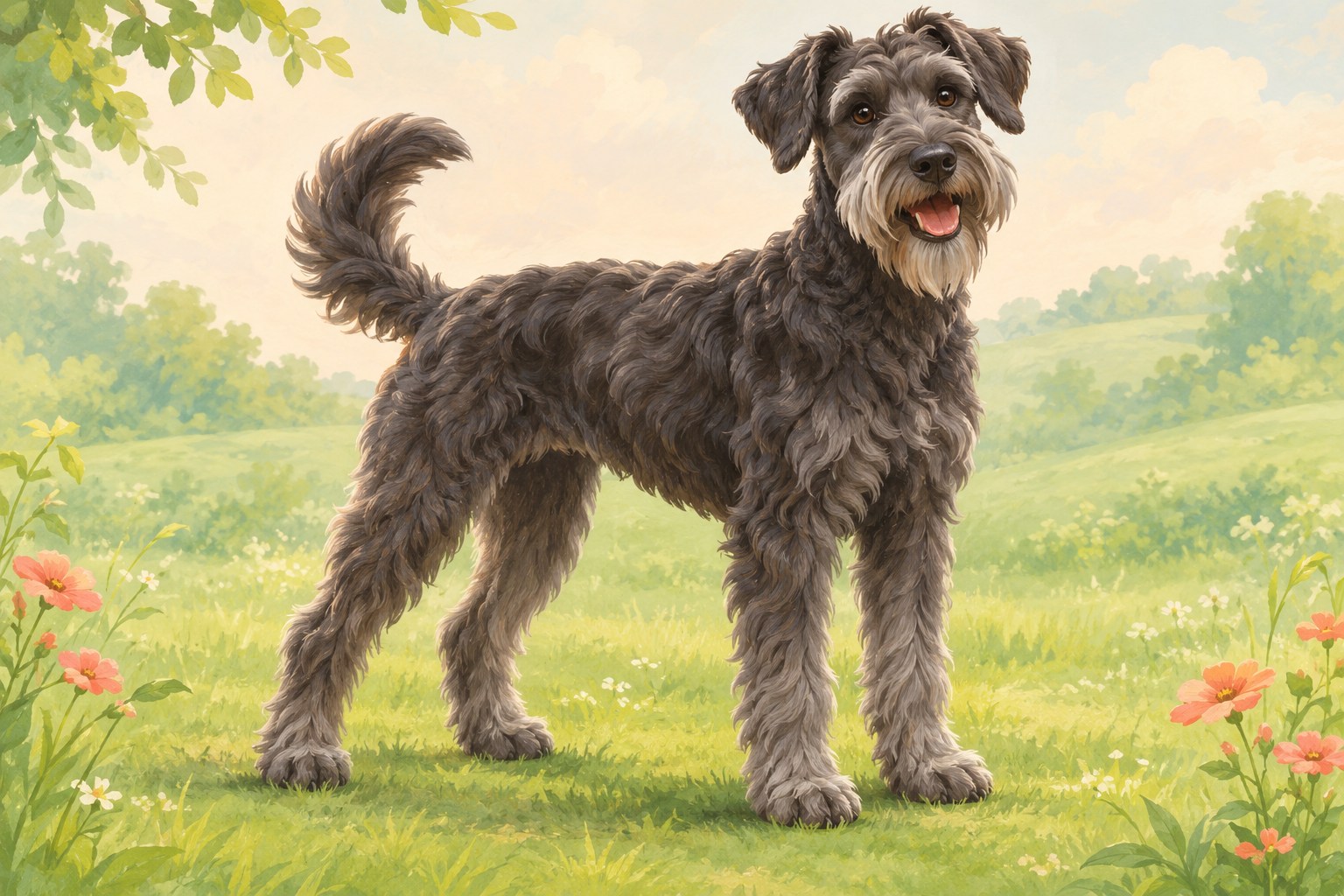
A Standard Schnoodle is often described as a medium-sized or larger Schnauzer-Poodle cross. The word standard is especially easy to misread: it can refer to the Schnoodle’s advertised size, a Standard Schnauzer parent or a Standard Poodle parent. These are different pieces of information. Ask which meaning is intended.
Parent standards provide context, not a calculator for a puppy. The FCI Standard Schnauzer range is 45-50 cm at the withers; its Standard Poodle range is over 45-60 cm, with a stated height tolerance. Poodle size terminology also differs across registries. Confirm the real adult measurements before deciding that a dog will fit a crate, a car or a preferred walking routine.
Measure the individual. Height is ground to withers. Check chest, neck and back measurements for equipment. A healthy weight is assessed with body condition and muscle, not a size-name target.
Daily life with a
Standard Schnoodle.
Plan for adolescent manners
Think ahead about excited greetings, passing dogs and moving through doorways. Teach four paws on the floor and a calm pause while the dog is manageable, then practise as distractions increase. Set up a gate or resting space when visitors make training impractical.
Room to move and room to stop
A bigger stride does not mean every day needs to become an endurance event. Offer appropriate walks and exploration, add learning or scent games, and protect quiet rest. Adapt demands to age, health, fitness and weather.
Check the practical fit
Try the available car space, sleeping area and safe routes around the home. Consider who will manage the lead if the main carer is unavailable. A useful plan includes backup care, grooming and travel logistics, not only an imagined weekend hike.
Make the routine
work on an ordinary day.
Coat care is still individual
A larger coat takes time to check thoroughly. Divide brushing into comfortable stages if needed, teaching short handling sessions before knots become difficult. Look at friction areas and the skin underneath. Discuss a manageable pet trim and appointment schedule with a groomer; a picture of another Standard Schnoodle is not a care specification.
Food and growth need attention
Choose complete food for the appropriate life stage and keep track of condition, muscle and weight. Ask your vet when to change a growing dog’s diet and how to adapt exercise. Avoid adding supplements or increasing portions purely because an advert predicted a larger final size.
Teach the life
you want to share.
A Standard Schnoodle may be strong enough to make pulling or jumping difficult for the household. Start loose-lead practice in quiet surroundings and reward positions you can comfortably maintain. Use secure, well-fitted equipment and space around triggers while you develop skills. Physical strength is a reason to organise better training, rather than use more force.
Include a calm mat-settle in household life and practise polite visitor routines before a busy occasion. With children, supervise actively and preserve a dog-only retreat. A medium size label does not establish a gentle temperament or make a child the appropriate person to hold the lead.
Ask for evidence.
Leave room for variation.
Ask which health checks and relevant screening were performed on each parent, request the actual results and discuss their meaning with a vet. “Vet checked” is not the same as a documented screening programme. A cross can inherit problems from either line; mixing breeds does not provide a guarantee against illness.
Meet the individual and discuss your household honestly with a responsible breeder or rescue. No size label guarantees an easy family dog, a particular coat or freedom from allergies. If allergies affect the household, seek medical advice and spend time around the actual dog before committing.
A little more clarity.
Is a Standard Schnoodle always a Standard Schnauzer cross?
No. Standard may describe an advertised adult size rather than documented parentage. Ask for the exact Schnauzer and Poodle varieties and the actual parents’ measurements.
Are Medium and Standard Schnoodle the same?
Sometimes people use them interchangeably, but there is no shared universal rule. Compare measurements and ancestry rather than assuming the words refer to identical dogs.
Can a Standard Schnoodle be a beginner’s dog?
Potentially, with a suitable individual dog, realistic care arrangements and access to reward-based training support. Handling ability, temperament and the household’s time matter more than whether a label is marketed as beginner-friendly.
Four labels.
Plenty of personality.
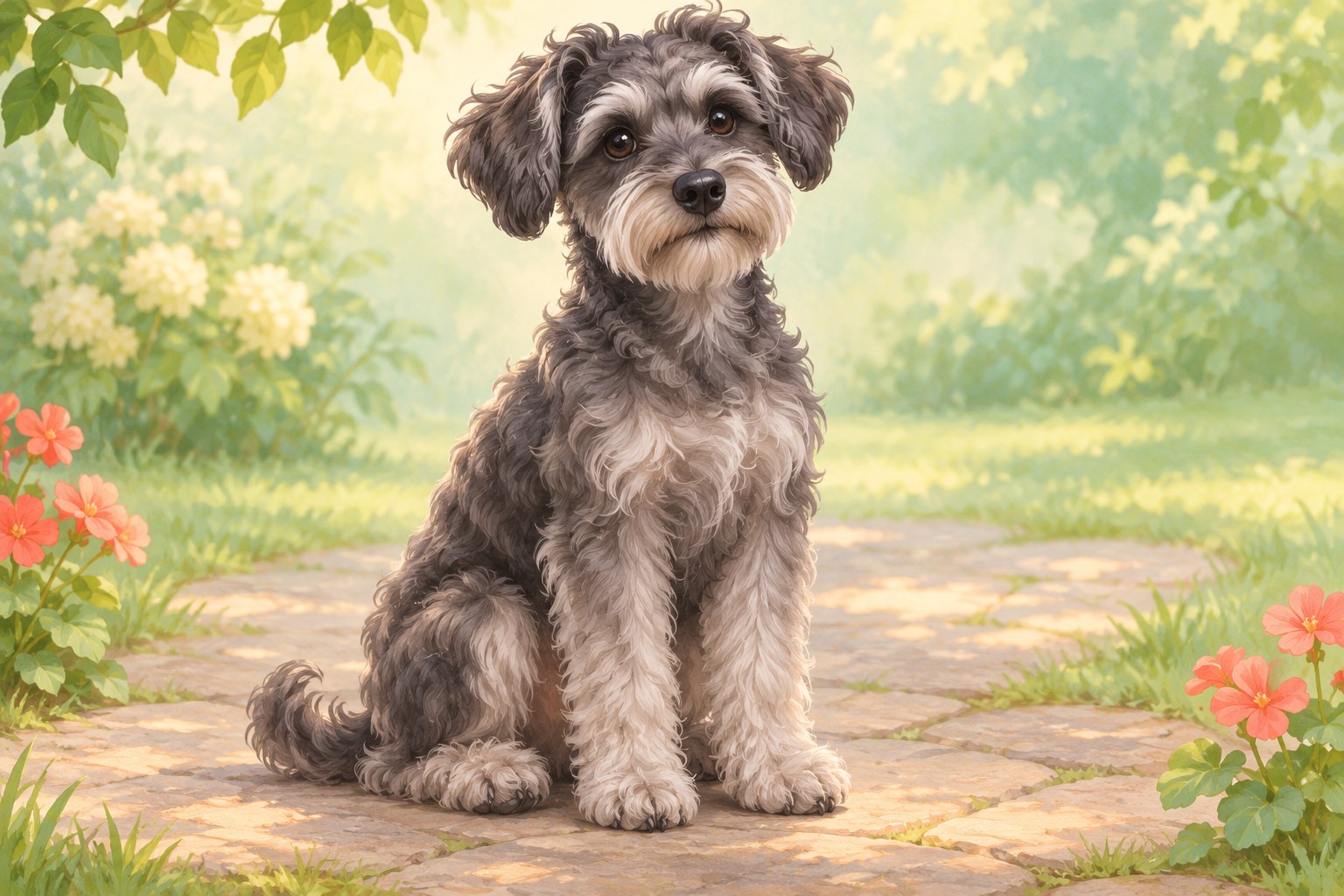
Toy Schnoodle →
Small companion, full-sized care needs.
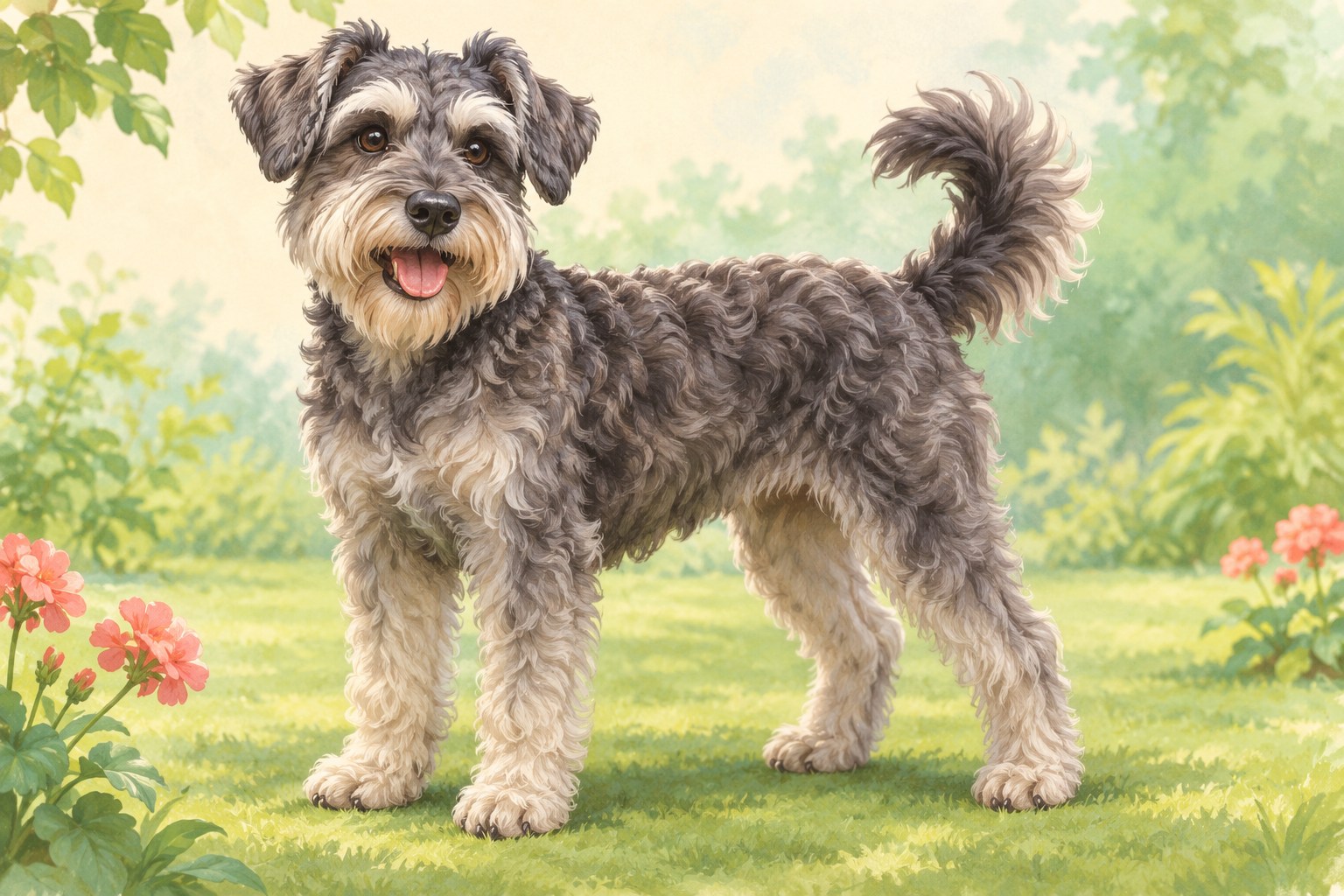
Miniature Schnoodle →
Compact, curious and ready to learn.
Standard Schnoodle →
Room for movement, training and daily life.
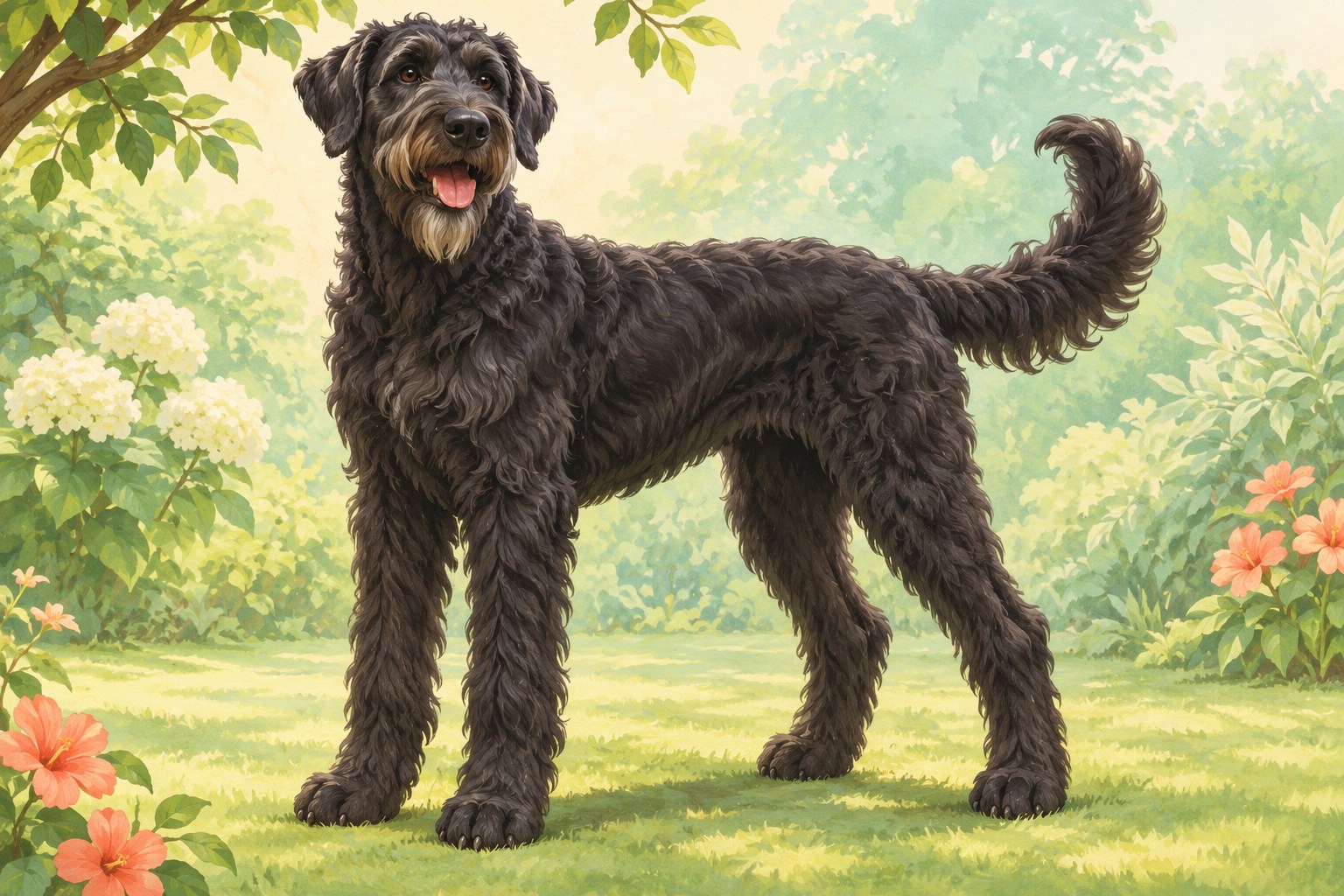
Giant Schnoodle →
A bigger dog, a more substantial commitment.
Independent information, individual dogs. These pages are educational and are not presented as veterinarian-reviewed. Ask your own vet about health, diet and symptoms. Illustrations show possible appearances; they do not establish ancestry, show a breed standard or compare dogs to scale.