Standard
Schnauzer
A wiry coat, a watchful expression and a mind that likes a challenge. Meet the original Schnauzer, and discover the daily life behind that unmistakable beard.
Independent breed information. Practical care. Room for the individual.
The original size.
A character all its own.
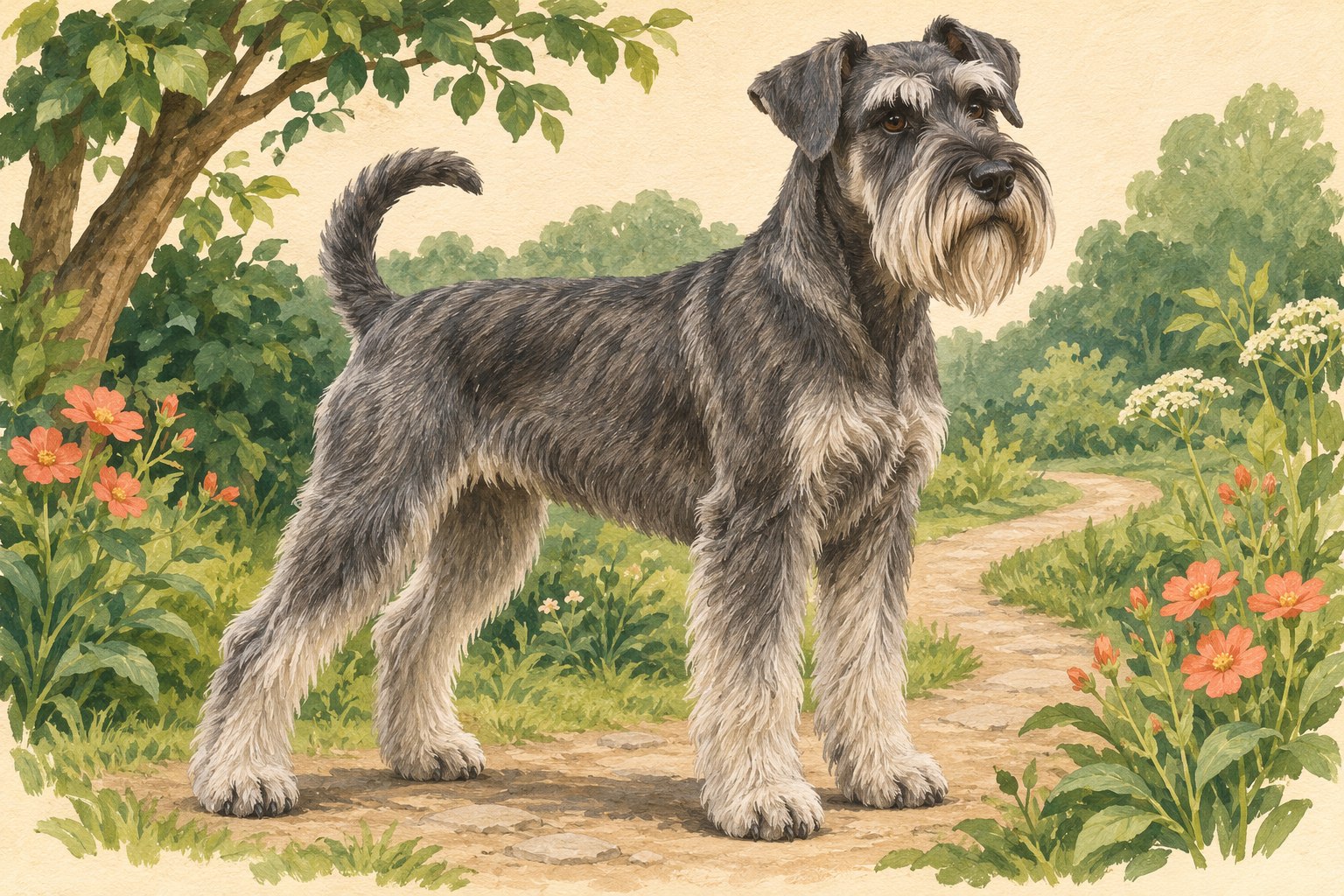
The Standard Schnauzer is the medium-sized member of the Schnauzer family, rather than a large Miniature or a small Giant. Its sturdy, almost square outline and distinct beard are easy to recognise. Under that practical coat is an active dog that benefits from involvement, clear teaching and things to investigate.
Think about ordinary Tuesdays as much as weekend adventures. Who will arrange walks, practise calm greetings, maintain the coat and provide company? A Standard can suit an engaged household, but its manageable size should not be mistaken for a promise of minimal work.
A proper beard.
A distinctive outline.
A harsh, wiry outer coat, dense undercoat and sturdy frame create the familiar Schnauzer silhouette. Here is the adult size reference to keep in perspective.
top of the shoulders45–50 cm
Reference: FCI standard 182. Kennel-club standards vary. These figures are not a guaranteed size or an individual healthy-weight target.
How to measure. With the dog standing comfortably on level ground, measure vertically from the ground to the withers, the high point above the shoulders. For a harness or coat, use the manufacturer’s chest, neck and back measurements too. Never select equipment from breed name alone.
Notice the dog.
Teach the next step.
Curious by nature
Make room for sniffing and exploring. Turn part of a walk into a small search game, rather than expecting continuous marching at your pace.
Watchful, not a security system
A dog noticing visitors needs a plan for what happens next. Teach a comfortable place to settle and reward calm behaviour before greetings become hectic.
Independent thinking
Practise useful skills in small steps. Reward the behaviour you want, keep expectations consistent and make success possible before adding distractions.
An active life.
A balanced day.
Build a day around varied activity: walks with time to sniff, a few brief teaching sessions, play and proper rest. An adult dog may enjoy scent work, obedience or suitable agility, but enthusiasm does not replace physical readiness. Ask your vet about activity during growth, recovery or later life.
A useful starting routine is a relaxed morning outing, an easy search for part of a meal, quiet time, and another opportunity to explore later. Adjust the plan to your dog’s comfort and behaviour. If the dog struggles to settle, consider sleep, worry and overstimulation as well as whether the day provides enough appropriate activity.
A good life is built
in small habits.
A comfortable coat. A chance to sniff. A routine they can understand.
The coat beneath the surface
Brush and comb gently, checking where friction creates tangles: behind ears, under the legs and around the beard. Work with a groomer on the right tools and a schedule for your dog’s coat, comfort and lifestyle.
Choose the maintenance plan
Discuss clipping and hand-stripping with a groomer experienced in wire coats. They are different maintenance approaches; the right practical plan depends on coat condition, skin health and what the dog comfortably tolerates.
Beard, paws and handling
Clear food from the beard and dry it after washing. Practise comfortable paw handling and nail care in short rewarded steps. Pain, persistent redness, odour or irritation needs veterinary advice rather than harder brushing.
Mouth, meals and body condition
Introduce dog-safe tooth brushing gently and discuss dental care with your vet. Choose complete food appropriate to life stage, measure portions and account for treats. Monitor body condition rather than feeding towards a breed-standard maximum.
Train for cooperation.
Make room for calm.
Use reward-based teaching: show the dog what works, reinforce it, then build difficulty gradually. Practise recall in a secure area and lead walking somewhere manageable before adding busy surroundings. Brief successful sessions give you more to build on than repeated failure around the hardest distractions.
Teach a quiet resting place, comfortable handling and gradual time alone alongside active skills. Socialisation should mean safe, positive experiences at a distance the dog can manage, not compulsory greetings with every stranger. Ask your vet about safe puppy outings and seek qualified help for fear, aggression or a sudden behavioural change.
Small animals need their own safety plan
The breed’s ratting background makes it sensible to take chasing seriously. Use secure management, reward attention around distractions and keep vulnerable small pets safely separated. A successful introduction in one context does not guarantee safety when an animal runs or an owner is absent.
Could this be
your kind of companion?
Use these prompts to plan a conversation with a responsible breeder or rescue. They are a checklist, not a suitability score.
A possible fit
You enjoy regular outdoor time and can provide mental activity too.
Think carefully: A mostly sedentary routine with little opportunity to explore.
A possible fit
You are willing to practise recall, lead skills and calm greetings.
Think carefully: Expecting intelligence to mean effortless obedience.
A possible fit
You can maintain the beard and coat between grooming visits.
Think carefully: Wanting a coat that needs almost no hands-on care.
A possible fit
You can supervise, offer retreats and plan introductions carefully.
Think carefully: Assuming a breed description makes chasing or rough play impossible.
A possible fit
You can reward calm responses and manage the doorway.
Think carefully: Expecting instant enthusiasm for every unfamiliar person.
A possible fit
You can build time alone gradually and arrange help when needed.
Think carefully: Leaving a new dog to cope with long absences without preparation.
Ask for evidence.
Plan for the individual.
Before committing, ask for the parents’ documented health-screening results and discuss them with your vet. Ask a responsible breed club which checks are currently recommended for this breed in your country. “Vet checked” alone does not describe a screening programme, and good results cannot guarantee a lifetime without illness.
Keep routine veterinary care, parasite prevention and vaccinations on an individual plan. Report persistent itching, changes in thirst or appetite, unusual tiredness, stiffness or altered behaviour. These signs have many possible causes and cannot be diagnosed from a breed guide.
Working roots.
Modern companionship.
The Standard is the original Schnauzer size. Its background lies in southern Germany, where rough-coated dogs worked around stables and controlled rodents. The FCI standard records the earlier name “rough-haired Pinscher” when the Pinscher-Schnauzer Club was founded in 1895.
That working background offers context for a busy, observant companion today. It does not determine every individual’s personality. Meet adult dogs, ask about the parents and discuss what life with this particular dog is likely to involve.
The questions
worth asking.
How big is a Standard Schnauzer?
The FCI reference for adults is 45–50 cm at the withers and 14–20 kg. Kennel-club standards differ, and individual dogs can fall outside those figures. Use body condition and veterinary advice for a healthy weight.
Is a Standard Schnauzer a good first dog?
Potentially, if the individual suits your home and you have realistic time for training, activity and grooming. Meet adults, discuss your routine honestly with a breeder or rescue, and arrange reward-based support before difficulties develop.
Can a Standard Schnauzer live in a flat?
Floor space alone does not decide suitability. Daily outings, comfortable rest, access arrangements, noise sensitivity and how the dog copes with neighbours and time alone matter more than a garden being present.
Is the coat hypoallergenic?
No dog breed can guarantee freedom from allergic reactions. Low shedding and low maintenance are different things. If someone in the household has allergies, seek medical advice and spend time around the actual dog before committing.
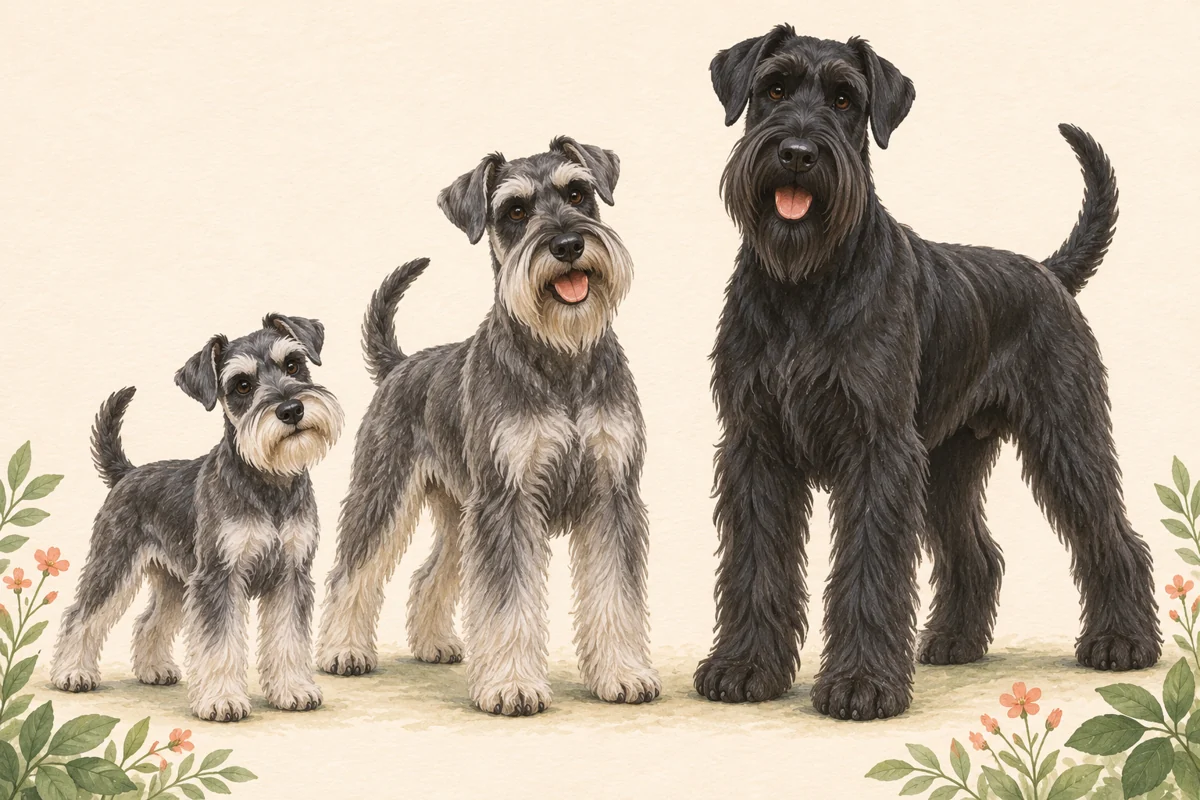
Three breeds.
One unmistakable beard.
Independent information, individual dogs. This guide is educational and is not presented as veterinarian-reviewed. Your veterinary team should advise on health, symptoms, diet and suitable activity. Breed descriptions cannot guarantee temperament, health or suitability.
Sources and further reading. FCI breed standard 182 · AKC: breed and lifestyle background · AVSAB: humane training · RSPCA: choosing a breeder · Blue Cross: grooming.
Original English text and AI-assisted breed illustrations for Schnauzerdeild. Illustrations are not photographs or scale drawings. Updated November 2026.