Meet the
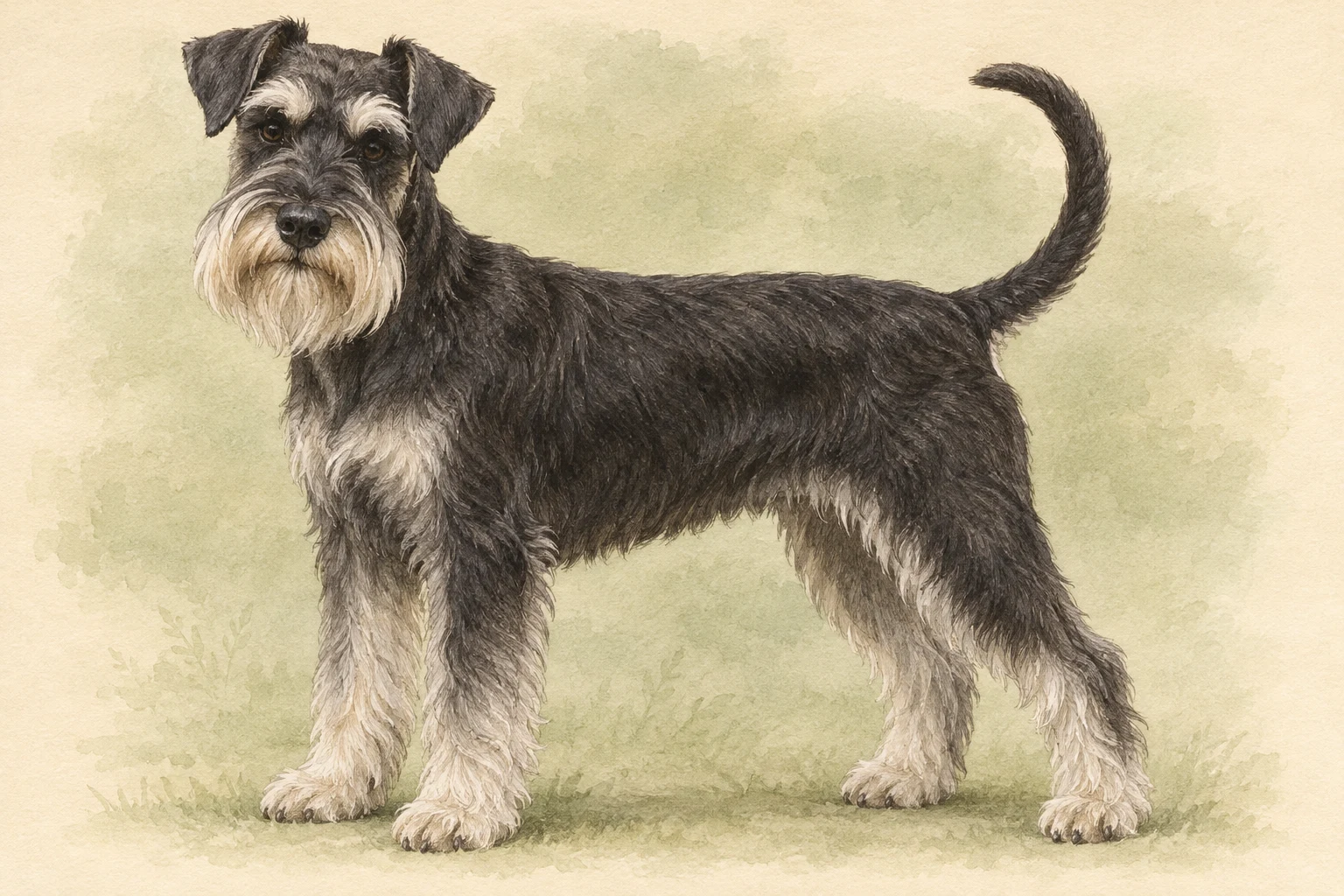
Miniature Schnauzer.
Small, sturdy and unmistakably Schnauzer.
- Height at the withers
- 30–35 cm 12–14 in, approximately
- Adult weight
- 4–8 kg 9–18 lb, approximately
- Coat
- Harsh & wiry Dense undercoat
- Distinctive features
- Beard & bushy brows Strong, nearly square build
Height and weight: FCI breed standard No. 183. Standards vary by kennel club; individual dogs may differ. Illustration is not to scale.
Could this breed fit your lifestyle? ↓

Mini schnauzer
General Care
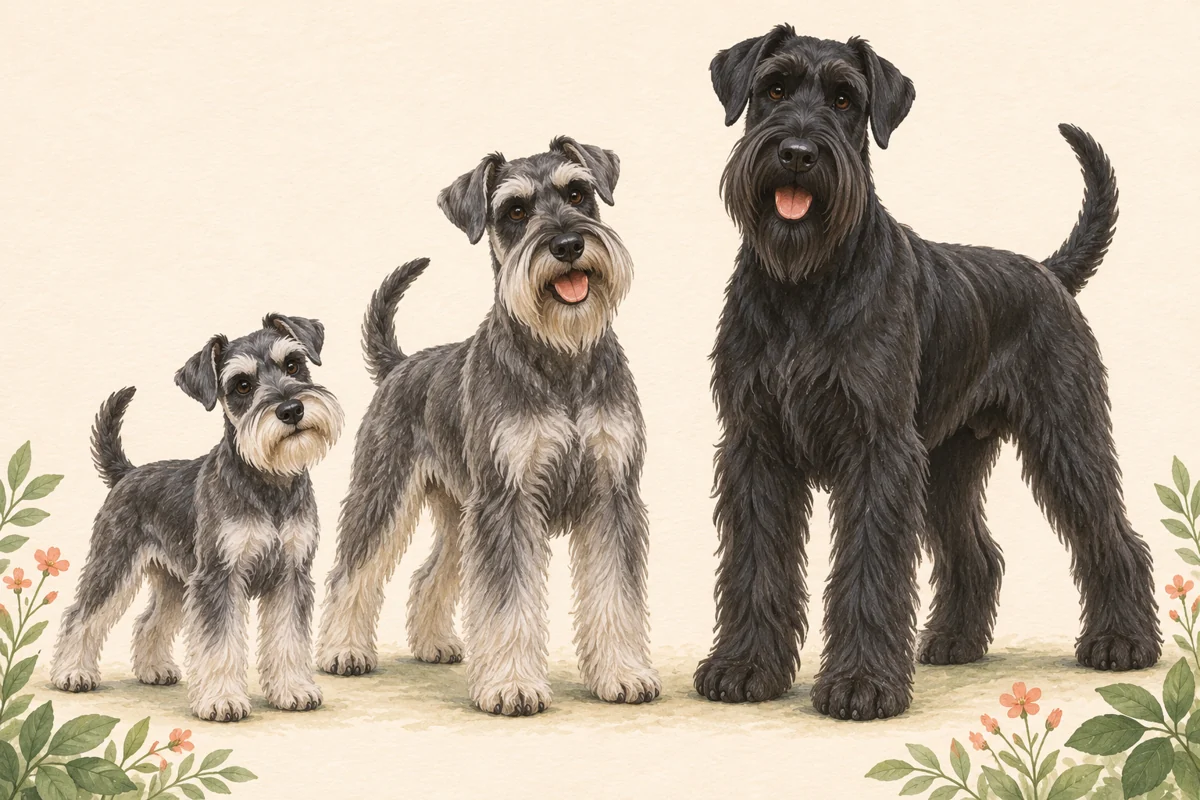
Miniature Schnauzers are descendants of German working dogs, originally bred to herd, pull carts, and hunt rats. Today, they’re known for being friendly, intelligent, and adaptable family pets. Their unique beards even inspired their name—Schnauze, meaning “muzzle” in German. Mini Schnauzers stand around 12–14 inches tall and weigh between 10–20 pounds, making them the smallest of the Schnauzer trio (the others being Standard and Giant Schnauzers).
Exercise and Activity
Mini Schnauzers are playful and thrive on both mental and physical stimulation. They enjoy daily walks, puzzle games, and agility training. An hour of activity per day keeps them happy and healthy. Their wiry coats don’t shed much, making them suitable for some allergy sufferers.
Health Considerations
Mini Schnauzers are typically healthy and live around 12–15 years. However, they can be prone to certain health issues:
- Cataracts: Can cause cloudy vision; surgery is often an option.
- Hyperlipidemia: High cholesterol levels; treatable with diet and medication.
- Pancreatitis: Inflammation of the pancreas, needing prompt treatment.
- Liver Shunts: Blood flow bypassing the liver; may need surgical correction.
- Mycobacterium Avium Complex: A rare immune disease detectable by genetic testing.
Nutrition Tips
Mini Schnauzers need a balanced diet. Choose a suitable complete diet for the appropriate life stage, with a nutritional adequacy statement relevant to your region. AAFCO does not approve individual pet foods. There is no single fat percentage suitable for every Miniature Schnauzer; ask your veterinary team about diet choice, especially if your dog has a medical condition. Avoid overfeeding, as Mini Schnauzers love to eat and can easily gain weight, which can lead to health issues.
Training and Temperament
Mini Schnauzers are smart, energetic, and eager to please. They respond well to training and enjoy learning tricks, agility, and obedience exercises. However, they can be vocal, so consistent training is essential to manage barking.
Grooming Needs
These dogs have a double coat that needs regular care. Brush weekly and schedule grooming every 6–8 weeks. Pay extra attention to their beard, eyes, and ears to avoid tangling and keep them comfortable.
Family Life
Mini Schnauzers crave companionship and love being part of the family. They shouldn’t be left alone for long periods and do best in homes where they’re included in daily activities.

A-Miniature-Schnauzer-dog-
Lifestyle match · Miniature Schnauzer
Could a Miniature Schnauzer be right for you?
Use these six questions to reflect on your everyday life.
01 · Daily activity
Moderate · daily
✓ A possible fit
You enjoy daily walks and playful activity.
! Think carefully
You expect small size to mean no exercise.
02 · Training & mental work
Regular engagement
✓ A possible fit
You enjoy short, varied reward-based sessions.
! Think carefully
You want to skip everyday training.
03 · Owner experience
Committed beginners possible
✓ A possible fit
You can learn and seek training support.
! Think carefully
You expect a small dog to train itself.
04 · Coat care
Regular upkeep
✓ A possible fit
You can budget for brushing and grooming.
! Think carefully
You want a maintenance-free coat.
05 · Children & other pets
Supervised family life
✓ A possible fit
You can guide gentle handling and introductions.
! Think carefully
You expect every dog to enjoy every pet.
06 · Visitors & socialisation
Alert · may be vocal
✓ A possible fit
You will work on socialisation and barking.
! Think carefully
You need a reliably silent companion.
Your next step: Discuss your household and routine with a responsible breeder or rescue. Meet the individual dog before deciding.
A lifestyle checklist, not a suitability score. Individual dogs differ. Breed background: AKC owner guide.
FAQs about Mini Schnauzers
1. Are Mini Schnauzers Good Pets?
- Yes, mini schnauzers make wonderful pets! They are known for being loyal, friendly, and highly intelligent. This breed is great for families, as they are generally good with children and adapt well to apartment living or homes with yards. They tend to be energetic and playful but are also happy to snuggle up and relax. Their coats shed relatively little, but no dog can be guaranteed hypoallergenic. Spend time around the individual dog and seek medical advice if allergies affect your household.
2. Do Miniature Schnauzers Bark a Lot?
- Mini schnauzers are known to be vocal. They are alert and tend to bark at sounds or strangers, which makes them excellent watchdogs. However, with training and socialization, you can manage their barking tendencies. Early training can help them distinguish between regular household noises and actual threats, reducing unnecessary barking.
3. Are Mini Schnauzers High Maintenance?
- Mini schnauzers are moderately high maintenance, especially when it comes to grooming. Their wiry double coat requires regular brushing and grooming every 4-6 weeks to prevent matting. Many owners choose to have them professionally groomed, especially to maintain their signature beard and eyebrows. In terms of exercise, they need daily walks and playtime to keep their energy levels in check, but they’re not overly demanding.
4. Are Mini Schnauzers Expensive?
Mini schnauzers can be more costly than some other breeds. The initial purchase price can range between $1,000 and $3,000, depending on factors like breeder reputation, location, and lineage. Additionally, professional grooming, routine veterinary care, quality food, and training add to the overall expense. However, their relatively good health and longer lifespan can help offset some costs over time.
What are the Schnauzer sizes?
Miniature, Standard, and Giant, with Miniature being the smallest at 12–14 inches.
In Summary
Mini schnauzers are generally good-natured, affectionate, and intelligent pets who enjoy companionship. While they do require regular grooming and can be vocal, their loyal and loving nature often outweighs these considerations for many owners. Their costs can be on the higher side, but with proper care and training, they make delightful and rewarding companions