Giant
Schnauzer
An expressive beard, a substantial working-dog build and plenty of purpose. Look beyond the striking silhouette to understand the training, care and commitment a Giant Schnauzer needs.
Independent breed information. Practical care. Room for the individual.
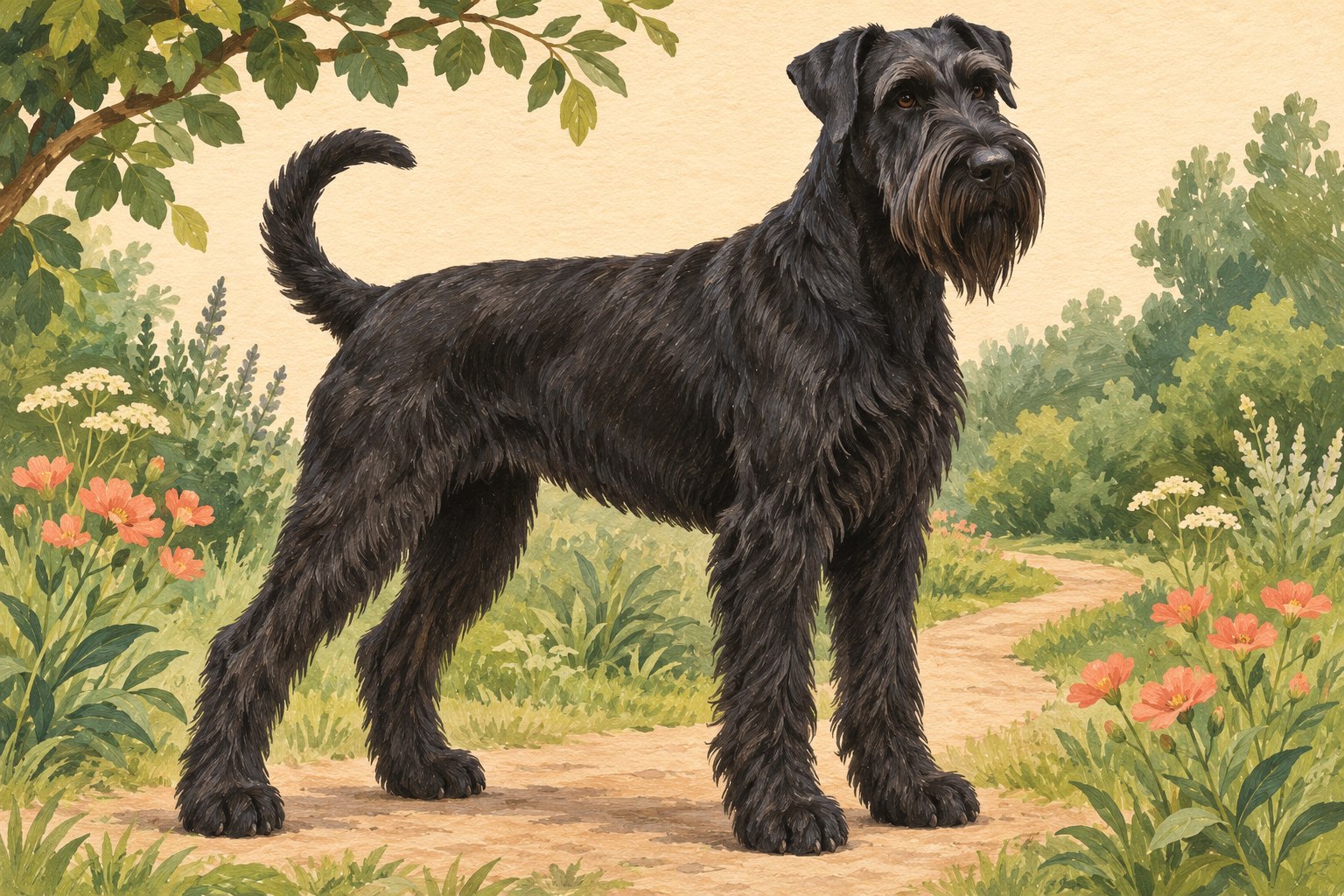
A powerful presence.
A thoughtful partnership.
The Giant Schnauzer is the largest of the three Schnauzer breeds. Its physical strength changes the practical side of ownership: greetings, lead walking, transport and everyday care all deserve planning. A garden or a large house cannot provide that preparation on its own.
The rewarding question is not whether you like the breed’s appearance. It is whether your household can consistently meet the needs of an alert, active individual. Consider support if you become ill, who can safely handle the dog, and where calm rest will fit alongside exercise and teaching.
A proper beard.
A distinctive outline.
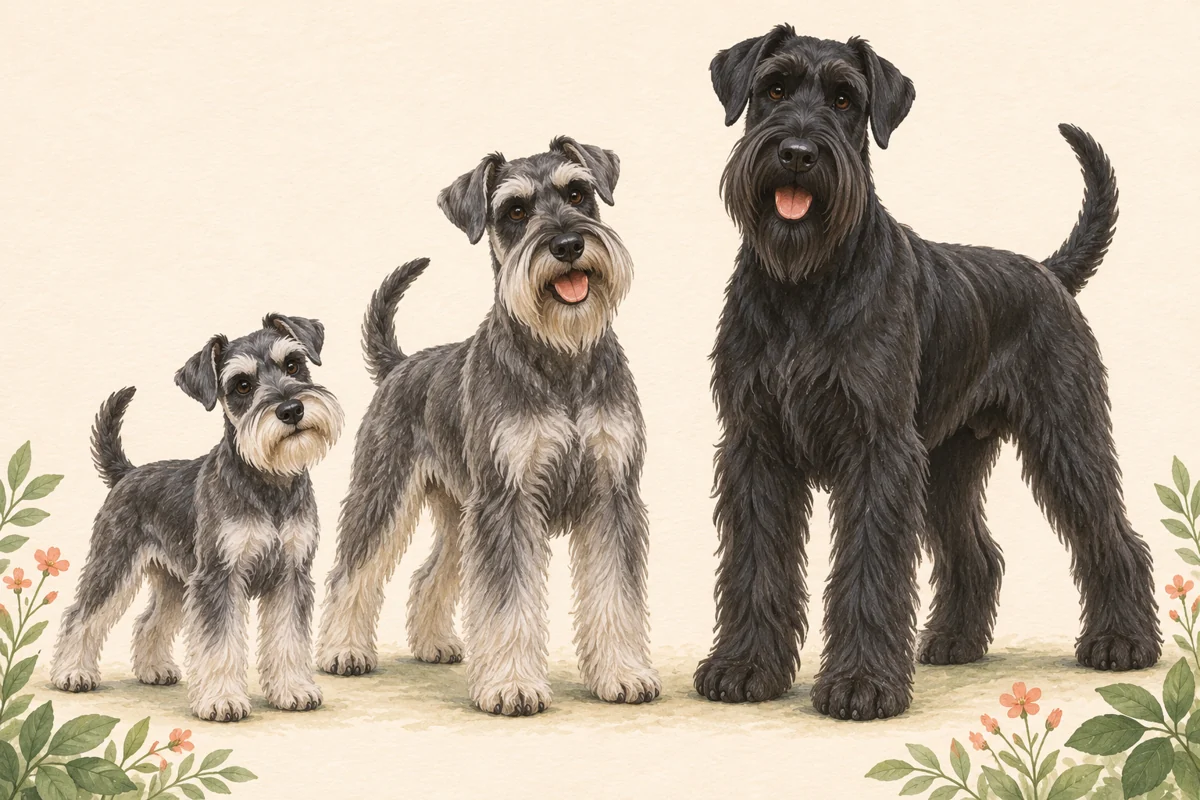
A harsh, wiry outer coat, dense undercoat and sturdy frame create the familiar Schnauzer silhouette. Here is the adult size reference to keep in perspective.
top of the shoulders60–70 cm
Reference: FCI standard 181 and VDH breed profile. Kennel-club standards vary. These figures are not a guaranteed size or an individual healthy-weight target.
How to measure. With the dog standing comfortably on level ground, measure vertically from the ground to the withers, the high point above the shoulders. For a harness or coat, use the manufacturer’s chest, neck and back measurements too. Never select equipment from breed name alone.
Notice the dog.
Teach the next step.
An engaged working mind
Give the dog useful outlets, such as scent searches and short, achievable training tasks. Being busy all day is not the goal; learning to switch off matters too.
Strength needs everyday skills
Loose-lead walking, waiting at doors and settled greetings have practical value. Teach them before excitement and physical size make an unpractised routine difficult.
Watchfulness needs guidance
Plan positive introductions and give unfamiliar people space. A breed’s protective reputation does not make it a reliable judge of situations or a substitute for home security.
An active life.
A balanced day.
Plan varied daily movement, mental activity and recovery, adjusted to age, health and fitness. Fit adults may enjoy hiking or suitable dog sports, but build up gradually. A growing puppy should not be treated as a small adult endurance athlete. Ask your veterinary team about appropriate exercise and feeding through growth.
A productive day can include an exploratory walk, a short scent task, lead-skills practice and generous quiet time. Choose activities your dog can handle comfortably, rather than repeatedly making the challenge harder. New reluctance to move, stiffness or lameness should be assessed, not described as stubbornness.
A good life is built
in small habits.
A comfortable coat. A chance to sniff. A routine they can understand.
The coat beneath the surface
Brush and comb gently, checking where friction creates tangles: behind ears, under the legs and around the beard. Work with a groomer on the right tools and a schedule for your dog’s coat, comfort and lifestyle.
Choose the maintenance plan
Discuss clipping and hand-stripping with a groomer experienced in wire coats. They are different maintenance approaches; the right practical plan depends on coat condition, skin health and what the dog comfortably tolerates.
Beard, paws and handling
Clear food from the beard and dry it after washing. Practise comfortable paw handling and nail care in short rewarded steps. Pain, persistent redness, odour or irritation needs veterinary advice rather than harder brushing.
Mouth, meals and body condition
Introduce dog-safe tooth brushing gently and discuss dental care with your vet. Choose complete food appropriate to life stage, measure portions and account for treats. Monitor body condition rather than feeding towards a breed-standard maximum.
Train for cooperation.
Make room for calm.
Use reward-based teaching: show the dog what works, reinforce it, then build difficulty gradually. Practise recall in a secure area and lead walking somewhere manageable before adding busy surroundings. Brief successful sessions give you more to build on than repeated failure around the hardest distractions.
Teach a quiet resting place, comfortable handling and gradual time alone alongside active skills. Socialisation should mean safe, positive experiences at a distance the dog can manage, not compulsory greetings with every stranger. Ask your vet about safe puppy outings and seek qualified help for fear, aggression or a sudden behavioural change.
Make arrivals predictable
Before opening the door, use a secure barrier or a comfortable separate space if needed. Ask guests to give the dog room, and reward quiet behaviour at a distance the dog can manage. If the dog is worried or reactive, get qualified help rather than repeatedly testing close greetings.
For a fuller discussion of watchfulness and responsible ownership, read our Giant Schnauzer guard-dog guide. The breed label alone does not promise protective ability or a particular temperament.
Could this be
your kind of companion?
Use these prompts to plan a conversation with a responsible breeder or rescue. They are a checklist, not a suitability score.
A possible fit
The adults responsible for walks can manage the actual dog safely.
Think carefully: Relying on a child or an unprepared visitor to control the lead.
A possible fit
You have time for activity, teaching, company and rest.
Think carefully: Expecting a large garden to supply all the dog’s needs.
A possible fit
You are prepared to seek reward-based help early.
Think carefully: Choosing a Giant for intimidation or assuming firm punishment is needed.
A possible fit
You can arrange regular coat maintenance and cooperative handling.
Think carefully: Waiting until a large, tangled coat becomes a difficult grooming job.
A possible fit
You can supervise, separate safely and plan introductions.
Think carefully: Assuming loyalty makes every interaction with children or guests safe.
A possible fit
Transport, boarding and care arrangements work for a large dog.
Think carefully: Having no alternative handler or emergency transport plan.
Ask for evidence.
Plan for the individual.
Before committing, ask for the parents’ documented health-screening results and discuss them with your vet. Ask a responsible breed club which checks are currently recommended for this breed in your country. “Vet checked” alone does not describe a screening programme, and good results cannot guarantee a lifetime without illness.
Keep routine veterinary care, parasite prevention and vaccinations on an individual plan. Report persistent itching, changes in thirst or appetite, unusual tiredness, stiffness or altered behaviour. These signs have many possible causes and cannot be diagnosed from a breed guide.
Know the emergency signs of GDV (bloat). Large, deep-chested dogs can be at risk. Repeated unsuccessful retching, a swollen or painful abdomen, sudden distress or collapse need immediate veterinary contact. Do not wait for symptoms to settle. Ask your vet about your own dog’s risk and prevention options.
Working roots.
Modern companionship.
The Giant Schnauzer developed in southern Germany and has a cattle-driving background. As work changed, the breed also became associated with guarding commercial premises and later police work. The history helps explain why size, stamina and alertness appear together in descriptions of the breed.
Modern companionship requires a different everyday skill set: safe handling, calm recovery, comfortable care and positive interactions. Historical working roles are background information, not a reason to encourage suspicion or confrontational behaviour in a family dog.
The questions
worth asking.
How large does a Giant Schnauzer get?
The FCI/VDH adult reference is 60–70 cm at the withers and 35–47 kg. These are breed-standard figures, not a guaranteed adult size or a feeding target. Other kennel clubs use different ranges.
Is a Giant Schnauzer suitable for beginners?
The combination of strength, activity and watchfulness can be demanding. A first-time owner needs a carefully matched individual, realistic handling arrangements and accessible professional support. Talk candidly to a responsible breeder or rescue before deciding.
Can a Giant Schnauzer live with children?
Assess the actual dog and household. Size can make an excited greeting or rough play consequential. An adult must supervise interactions actively, protect rest and eating areas, and provide separation when supervision is not possible.
Is a Giant just a larger Standard Schnauzer?
No. The breeds share a recognisable outline but have different histories and practical ownership demands. Compare the actual dog’s temperament, care needs and adult size instead of assuming an identical personality in a bigger body.
Three breeds.
One unmistakable beard.
Independent information, individual dogs. This guide is educational and is not presented as veterinarian-reviewed. Your veterinary team should advise on health, symptoms, diet and suitable activity. Breed descriptions cannot guarantee temperament, health or suitability.
Sources and further reading. FCI breed standard 181 · AKC: breed and lifestyle background · AVSAB: humane training · RSPCA: choosing a breeder · Blue Cross: grooming · VDH: Giant Schnauzer profile · AKC: Giant Schnauzer history · Giant Schnauzer Club: history.
Original English text and AI-assisted breed illustrations for Schnauzerdeild. Illustrations are not photographs or scale drawings. Updated November 2026.