


Giant
Schnoodle
A large companion deserves a substantial plan. Explore the Giant Schnauzer-Poodle mix, with thoughtful handling, care and health awareness.
Schnauzer × Poodle. Many possibilities. One individual dog.
What does
this size mean?
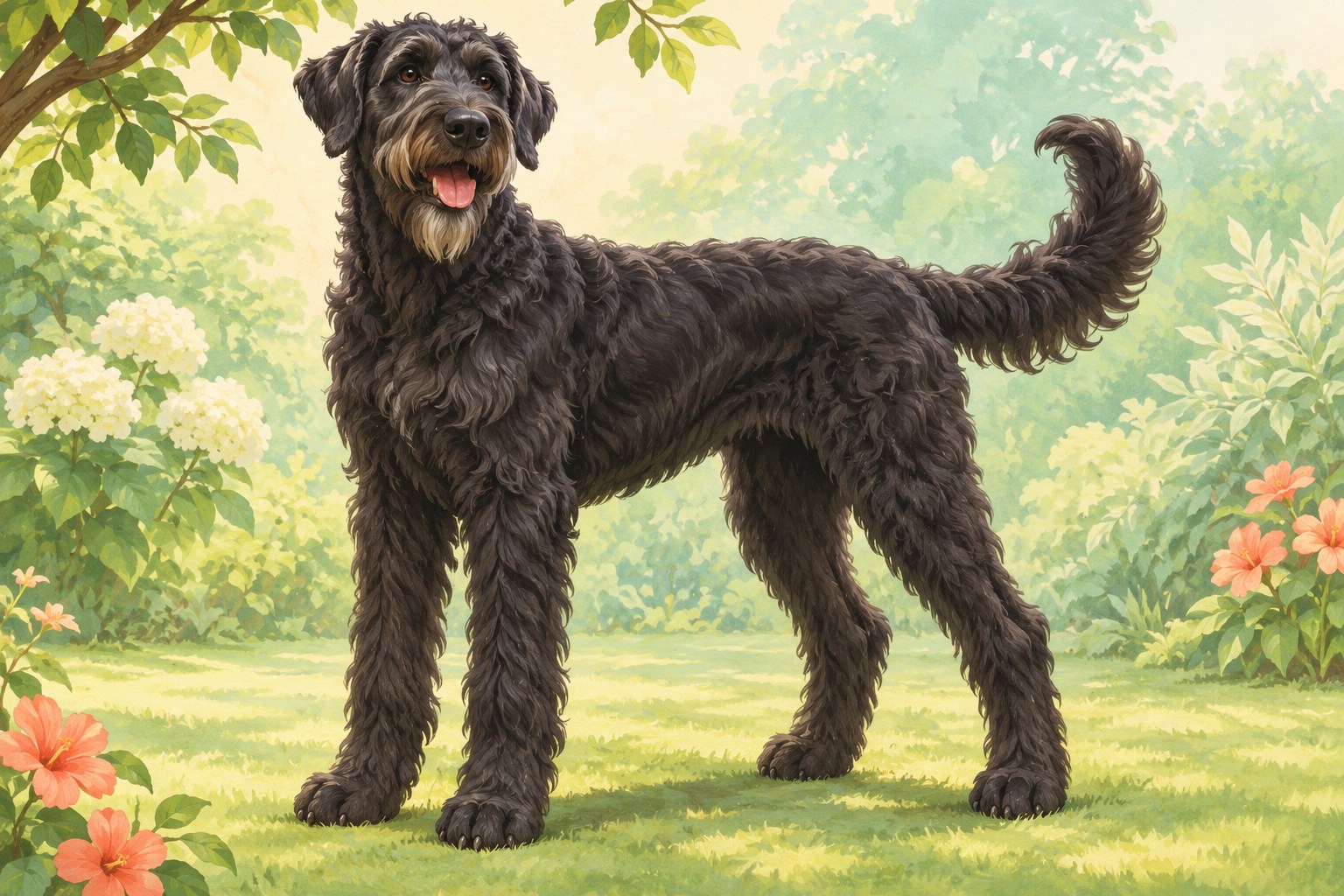
The Giant Schnoodle name usually points to a larger cross associated with Giant Schnauzer and Standard Poodle ancestry. It does not guarantee that every dog advertised under the name has the same breeding history. Confirm the parent varieties, actual adult measurements and information about adult relatives before planning around an expected size.
For context, the German kennel organisation VDH describes Giant Schnauzers as 60-70 cm at the withers. The FCI Standard Poodle reference is over 45-60 cm, with a stated tolerance. These figures describe parent breeds and must not be presented as a fixed height range or a healthy-weight target for a Giant Schnoodle.
Measure the individual. Height is ground to withers. Check chest, neck and back measurements for equipment. A healthy weight is assessed with body condition and muscle, not a size-name target.
Daily life with a
Giant Schnoodle.
Handling that the household can sustain
Consider who can comfortably manage the lead, help with transport and arrange care if you are away or injured. Make polite doorways, a settled greeting and comfortable equipment early priorities. Size magnifies the practical effect of an unpractised routine.
Budget for the actual dog
Ask local professionals about grooming, boarding and transport arrangements for a large dog. Food and clinical costs depend on the individual and the service. Keep a realistic reserve rather than assuming a large cross costs the same to maintain as a small one.
Use the space thoughtfully
Provide a bed large enough for the dog to stretch out, non-slip routes where helpful and a quiet retreat away from busy traffic. Secure the garden and think about how visitors enter. A big garden does not replace walks, company or teaching.
A big coat.
A cooperative routine.
Comfort beats a wrestling match
Teach a dog to accept touches, grooming tools and different care positions in short, rewarded steps. Tell the groomer about medical conditions, handling concerns and what your dog finds easy. Regular attention to the coat and friction areas is more practical than waiting for a large, difficult matting problem.
Growth, movement and recovery
Let your veterinary team guide feeding and appropriate activity during growth. Build fitness gradually rather than taking an enthusiastic young dog straight into long runs or repetitive jumping. A larger body does not make joints immune to discomfort. New stiffness, reluctance or lameness should be assessed, not attributed to stubbornness.
Teach the life
you want to share.
Choose reward-based teaching and practise where the dog can still think. A reliable recall begins in a secure space; loose-lead walking begins without the hardest distractions. Work on calm recovery as well as active skills. If the dog becomes worried or reactive around visitors, increase distance and seek qualified help rather than testing whether a large dog can be made to tolerate repeated close approaches.
Do not assume Giant Schnoodle means a ready-made guard dog, a reliable protector or a particular personality. Manage interactions with children and other animals according to what this dog actually shows. Prevent rehearsals of chasing or crowding while you teach safer alternatives.
Ask for evidence.
Leave room for variation.
Ask which health checks and relevant screening were performed on each parent, request the actual results and discuss their meaning with a vet. “Vet checked” is not the same as a documented screening programme. A cross can inherit problems from either line; mixing breeds does not provide a guarantee against illness.
Meet the individual and discuss your household honestly with a responsible breeder or rescue. No size label guarantees an easy family dog, a particular coat or freedom from allergies. If allergies affect the household, seek medical advice and spend time around the actual dog before committing.
A little more clarity.
What health issue deserves special emergency awareness?
Large, deep-chested dogs can be at risk of gastric dilatation-volvulus (GDV). Repeated unsuccessful retching, a swollen or painful abdomen, sudden distress or collapse require immediate veterinary contact. Do not wait for symptoms to resolve. Ask your vet about your individual dog’s risk and prevention options.
Does a Giant Schnoodle always grow larger than a Standard?
Not necessarily. Size labels overlap and breeding histories vary. Adult measurements and family information are more useful than the name, and a puppy’s final size remains an estimate.
Is the biggest Schnoodle the most active?
Size alone does not set an exercise prescription. Age, health, fitness and temperament matter. A balanced routine includes appropriate movement, mental activity, companionship and undisturbed rest.
Four labels.
Plenty of personality.
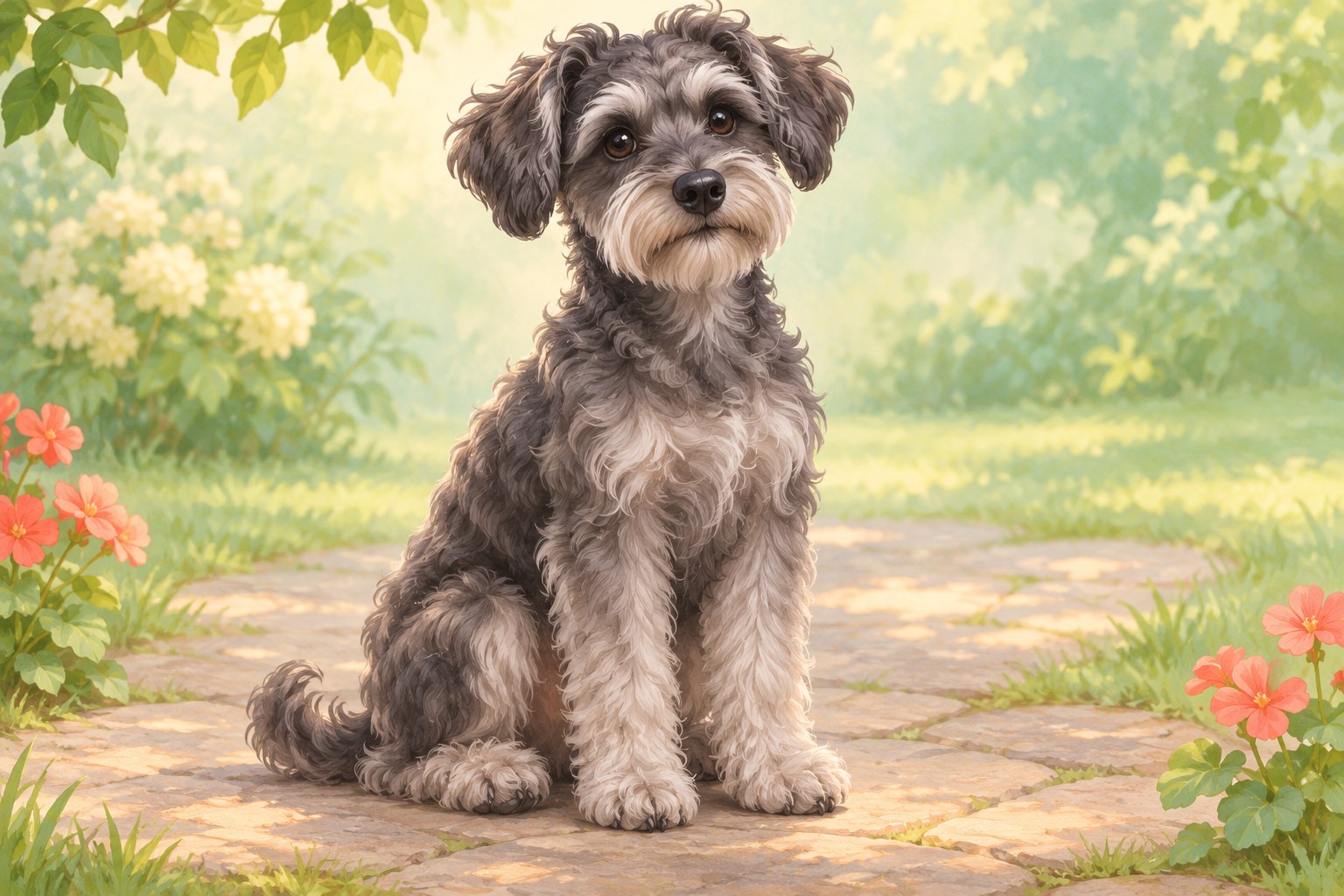
Toy Schnoodle →
Small companion, full-sized care needs.
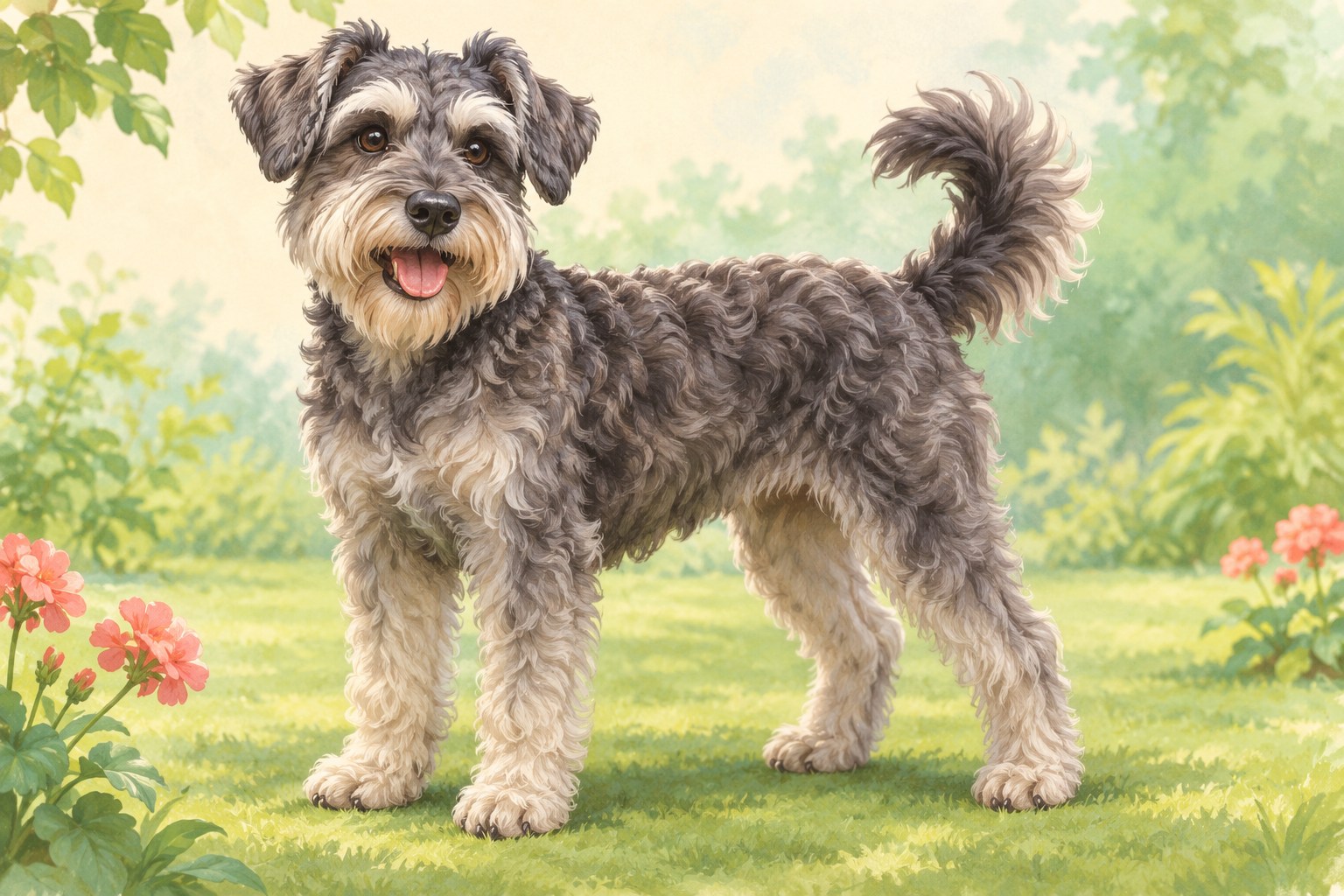
Miniature Schnoodle →
Compact, curious and ready to learn.
Standard Schnoodle →
Room for movement, training and daily life.
Giant Schnoodle →
A bigger dog, a more substantial commitment.
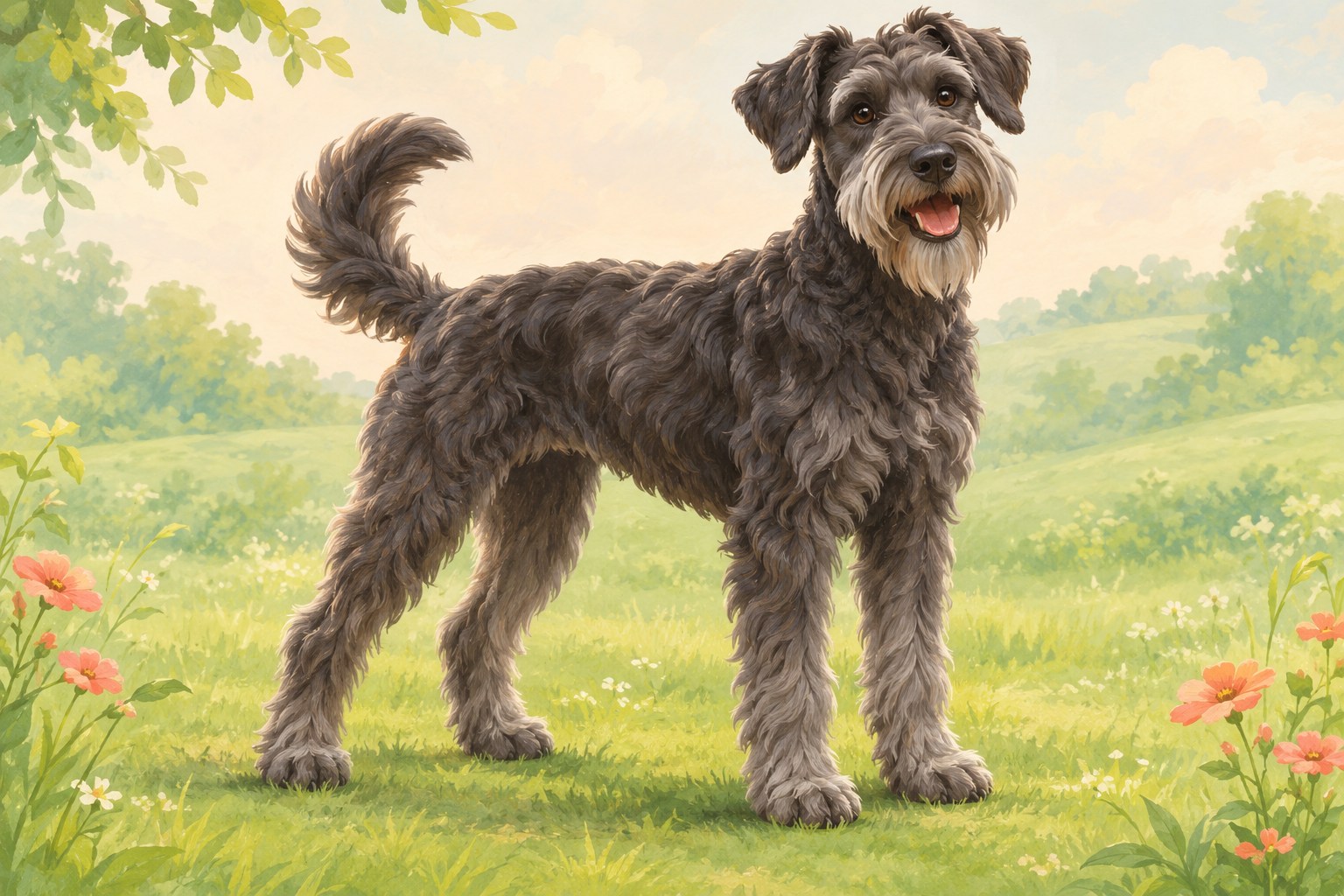
Independent information, individual dogs. These pages are educational and are not presented as veterinarian-reviewed. Ask your own vet about health, diet and symptoms. Illustrations show possible appearances; they do not establish ancestry, show a breed standard or compare dogs to scale.