


Miniature
Schnauzer.
Small dog. Big life.
The beard. The bright mind. The personality that fills a room. Discover what life with a Miniature Schnauzer really looks like – and how to make it a good one.
A complete English care companion. Free PDF. No email required.
 A LITTLE DOG
A BIG LIFE
More than
a memorable face.
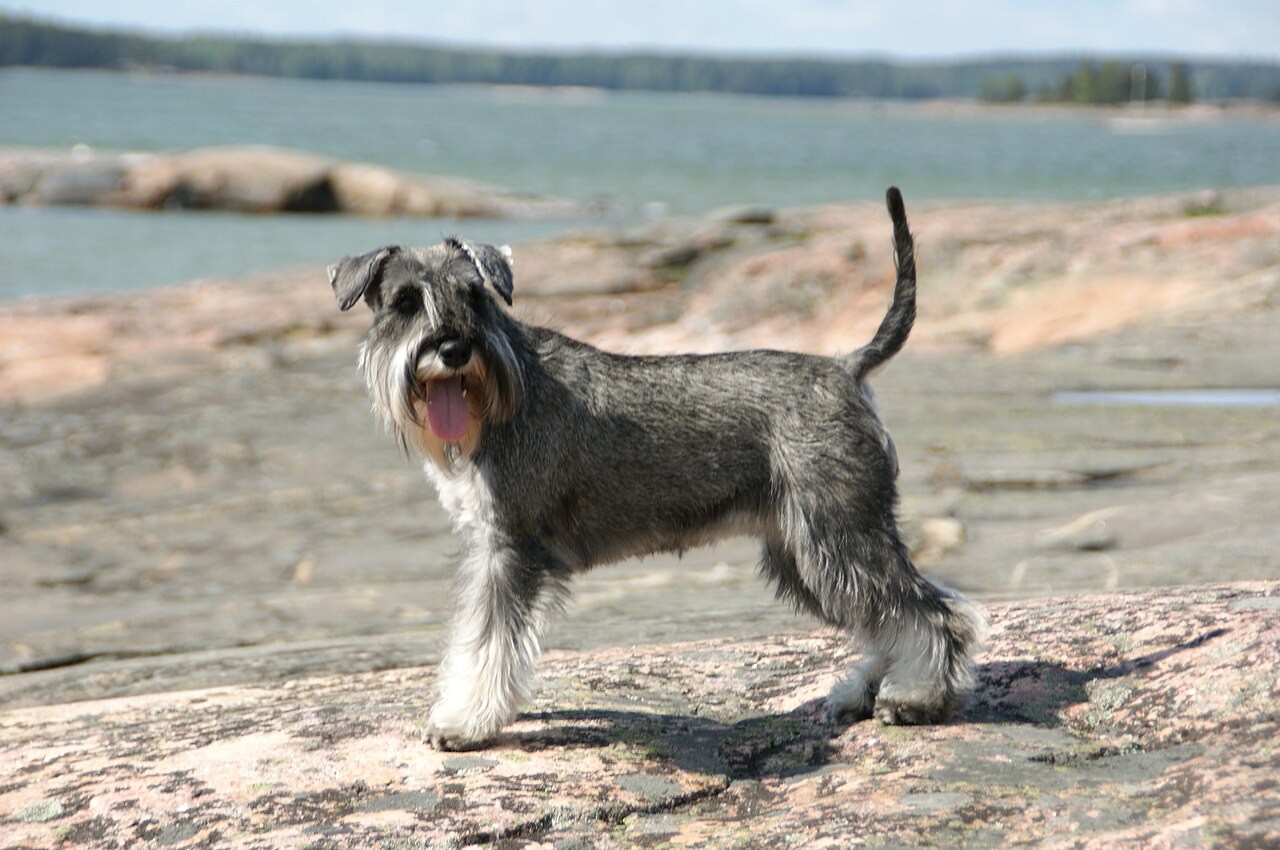
The Miniature Schnauzer developed in Germany as a smaller farm and ratting dog. Today, many bring that same curiosity to family life: investigating a new walking route, learning a useful trick or keeping a close eye on the household.
Small size can make practical life easier. It does not remove the need for company, thoughtful training, exercise and regular coat care. Think companion with a busy mind, rather than a dog who simply fits on the sofa.
Breed tendencies are a starting point, not a promise. Meet the individual dog and ask about their history, confidence and needs.
A little perspective.
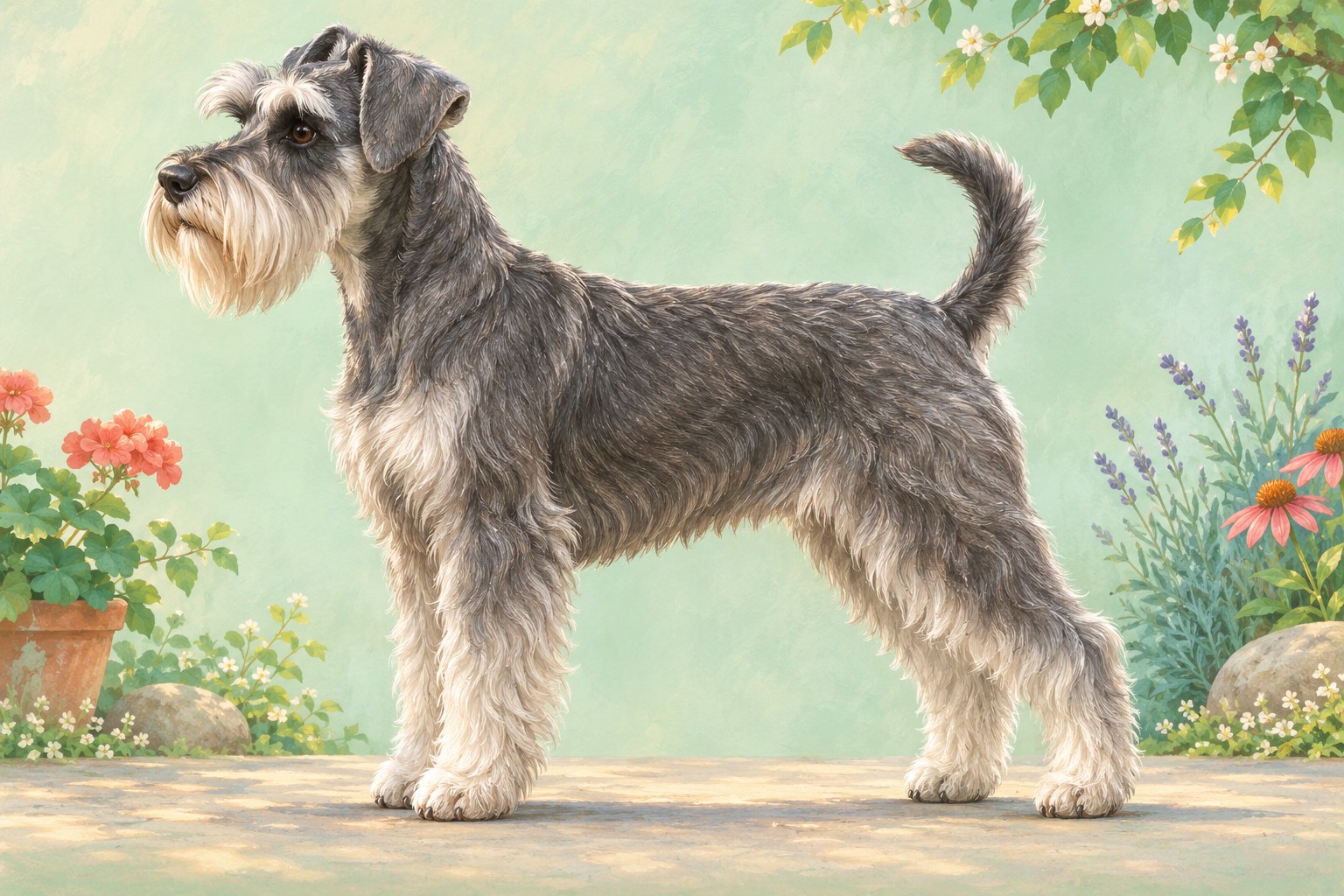
Measure height at the withers – the top of the shoulders where the neck meets the back. The top of the head is not the reference point.
Illustration, not to scale. Adult reference: FCI Standard 183.
Approximately 11.8-13.8 inches
Approximately 8.8-17.6 pounds
Buying a harness or coat? Measure your dog’s chest, neck and back length, then follow the maker’s fit guide. A label saying “Miniature Schnauzer” is not a fit guarantee. The PDF includes a measurement worksheet.
A good match starts
with ordinary life.
Look beyond the puppy photograph. These are the everyday questions worth answering before you bring a Mini home.
Can you make room for company?
Plan around your working day, travel and time away. Comfortable time alone is a skill to build gradually, with suitable care for absences your dog cannot yet manage.
Do you enjoy a little daily teaching?
Rewarding a calm greeting, practising recall and helping an alert dog settle after a noise all belong in normal life. Patience works better than expecting instant obedience.
Are you ready for the upkeep?
Allow for grooming, dental care, suitable food and veterinary costs. Check local prices and keep an emergency plan. A small dog still has substantial care needs.
Flat, house or family home? The address matters less than access to suitable outings, toilet breaks, rest and support. Children need active supervision around dogs. A quiet retreat should always remain the dog’s own space.
A good life is built
in small habits.
The beard & the coat
Gently remove food from the beard and dry it after drinking. Check the legs, belly, behind the ears and harness areas for tangles. Use a comb to check beneath the surface; tight or painful mats need professional help.
Teeth count too
Build towards daily brushing with dog toothpaste and a soft pet toothbrush. Start with comfortable handling and brief touches. Sore gums, bad breath or changes in chewing need veterinary attention; home brushing cannot remove established tartar.
Feed the individual
Choose a suitable complete diet for life stage and health. Weigh portions, include training rewards in the daily amount and keep fresh water available. Medical conditions can require a tailored diet – there is no single ideal fat percentage for every Mini.
Move, explore, recover
PDSA suggests around an hour of daily exercise as a general breed reference. Adapt it to age, fitness, health and weather. Include sniffing and rest, and build new activities gradually. Limping or unusual fatigue is a reason to seek advice.
Less pressure.
More understanding.
Reward the response you want to see again. Start somewhere quiet, keep practice short and change one challenge at a time. If a task repeatedly goes wrong, make it easier instead of making your voice louder.
Start with three useful skills
- A check-in: reward your dog for turning towards you when you say their name.
- A happy return: build recall in a secure space, then increase distance and distractions gradually.
- A place to settle: make a mat or bed a comfortable, rewarded resting spot.
And the barking? Notice the trigger. Create distance or screen a busy window, meet your dog’s needs and teach an easier response. Sudden behaviour changes deserve a veterinary check; ongoing fear or distress needs qualified support.
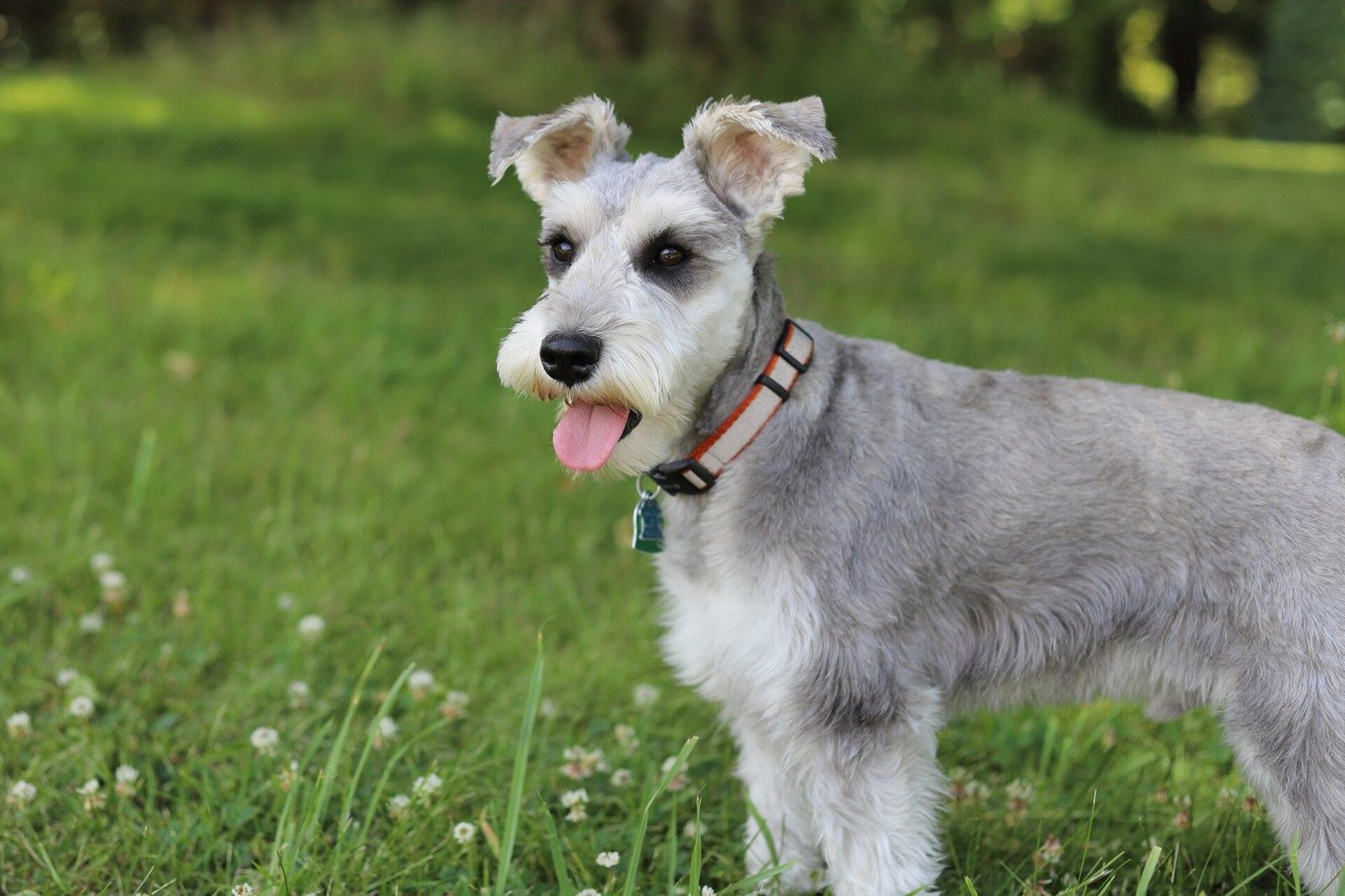
No guaranteed hypoallergenic dog. Low shedding does not mean allergy-free. Spend time around the actual dog and seek medical advice if allergies affect your household.
Make the beginning
easy to understand.
Prepare the calm.
Set up a quiet bed, fresh water, safe equipment and a secure toilet route. Remove hazards and agree who handles meals, nights and outings. Register with a veterinary practice and save the emergency number.
Keep the world small.
Use familiar food, limit visitors and give plenty of undisturbed rest. Reward voluntary contact and offer frequent toilet opportunities. Avoid packing grooming, a long trip and many introductions into one day.
Add one good experience.
Try a calm visitor, a quiet outing or a short handling exercise. Let the dog move away. For puppies, ask your vet how to balance early socialisation with local disease risks before vaccinations are complete.
There is no universal settling-in deadline. A newly arrived dog who seems ill or cannot eat or drink normally needs veterinary advice, rather than an assumption that it is just stress.
Informed.
Without being alarmed.
Breed-related risks are reasons for awareness, not predictions about your dog’s future. A veterinary assessment is needed to understand symptoms and choose treatment.
Blood fats & the pancreas
Miniature Schnauzers can be affected by inherited hyperlipidaemia. Some dogs have no obvious signs. Ask your vet whether testing is appropriate. Vomiting, poor appetite or abdominal pain can have several causes and need assessment.
Urinary comfort
The breed is among those affected by bladder stones. Straining, blood in urine or repeated small urinations call for prompt veterinary advice. Stone types need different treatment; do not try to change urine acidity yourself.
Eyes, skin & changing habits
Report new cloudiness, itching, painful handling or a clear change in drinking, movement or behaviour. Ask about appropriate screening when choosing a puppy. A genetic panel cannot guarantee lifelong health.
Call urgently: difficulty breathing, collapse, suspected poisoning, repeated unsuccessful retching or attempts to urinate with little or no urine need immediate veterinary contact. A suddenly painful eye also needs urgent assessment. This is not a complete emergency list.
Independent educational information. This page and the PDF are not a personal veterinary assessment and are not presented as veterinarian-reviewed.
Keep the whole
guide close.
Go further with our 37-page English Miniature Schnauzer care book: an illustrated, practical companion from the first days at home to the senior years.
- Breed character, size card and measurement worksheet
- Puppy care, socialisation, recall, barking and time alone
- Food, healthy weight, grooming, teeth and health awareness
- Travel, senior care, emergency contacts and printable planners
- Clickable contents, sources and photo credits
PDF · 37 pages · approximately 2.7 MB · no email or payment required
Before you fall
for the eyebrows.
Is a Miniature Schnauzer a good first dog?
Potentially, if you can provide consistent reward-based training, companionship, regular grooming and veterinary care. Meet the individual and discuss their needs honestly with the breeder or rescue. A well-matched adult dog may be more suitable than a puppy for some households.
How much grooming does a Mini need?
Enough to keep the coat comfortable and free of tight tangles. Check friction areas, beard and legs regularly. The right professional grooming interval depends on coat, haircut and home care. Ask a groomer to demonstrate a realistic routine. Clipping and hand-stripping have different purposes and should be chosen around the dog’s coat and comfort.
Can a Miniature Schnauzer be left alone?
Comfortable time alone must be built gradually. Start with separations short enough for the dog to stay relaxed and use a camera if helpful. Arrange company for absences beyond their current ability. Pacing, vocalising, drooling or exit scratching may indicate distress; involve your vet and a qualified behaviour professional.
Are they suitable for families with children?
Some are a good match, but breed alone does not guarantee compatibility. Adults must actively supervise, protect the dog’s retreat and teach respectful contact. Leave a resting or eating dog alone, and separate dog and child when supervision is not possible.
Is the guide really free?
Yes. The complete PDF is available directly from the download button, without an email form or payment. You can save it or print useful worksheets. Keep its source notes and image credits attached if you share it.
Where does the information come from?
The guide draws on veterinary organisations, animal welfare charities and official breed standards, including FCI, PDSA, WSAVA, AVSAB, AAHA, Blue Cross and the RSPCA. References are listed on pages 34-35 of the PDF. Information is educational and does not replace advice from your own veterinary practice.

