


Miniature
Schnoodle
Compact, curious and wonderfully individual. A practical guide to the Mini Schnoodle, from size expectations to a comfortable coat and daily routine.
Schnauzer × Poodle. Many possibilities. One individual dog.
What does
this size mean?
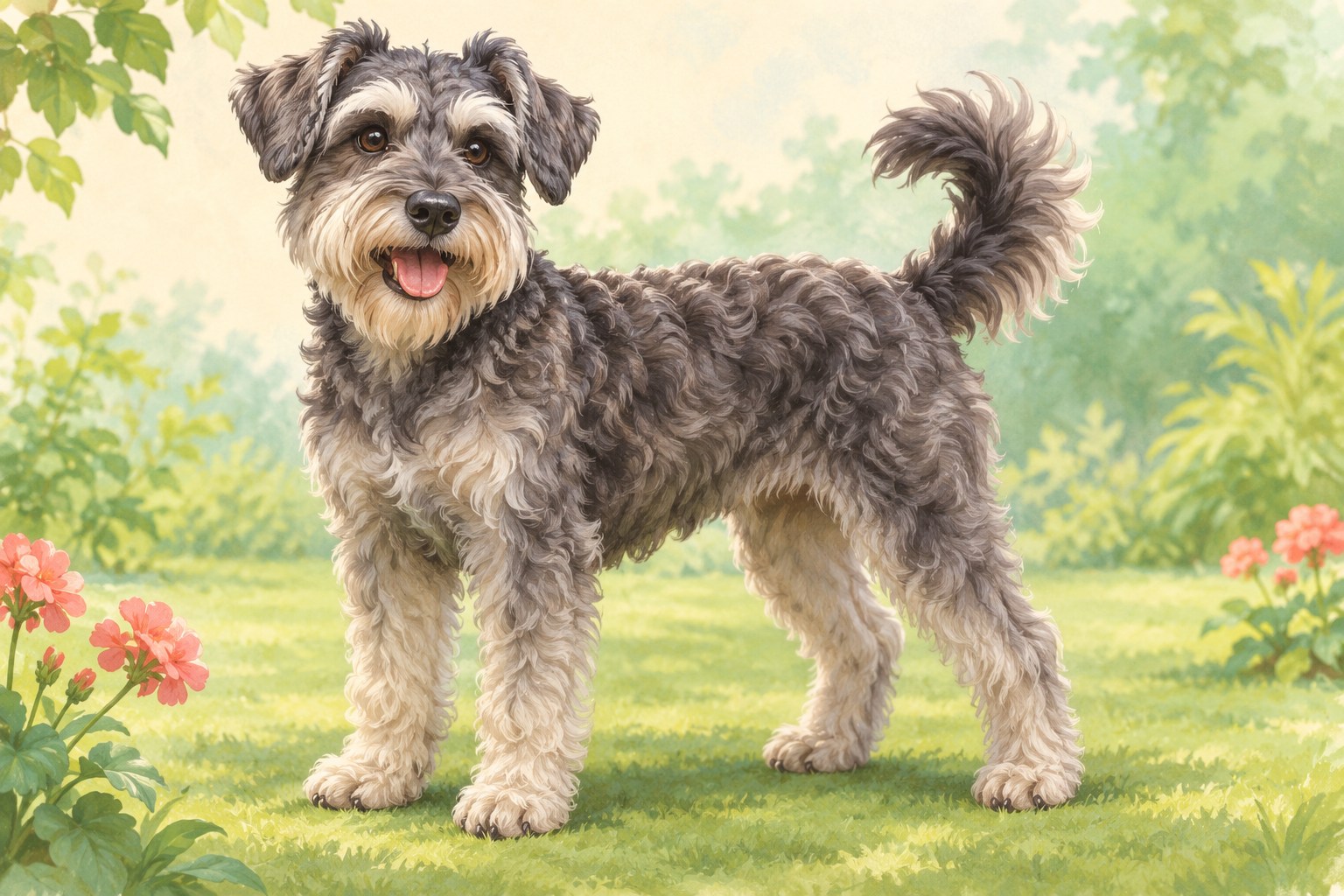
A Miniature Schnoodle, also called a Mini Schnoodle, is usually described as a smaller Schnauzer-Poodle cross. The label often points towards Miniature Schnauzer and smaller Poodle ancestry, but it is not a shared international specification. Ask which Poodle variety is involved and whether the dog is a first cross, a backcross or from Schnoodle parents.
The Miniature Schnauzer’s FCI height range is 30-35 cm. The FCI Miniature Poodle is over 28-35 cm. Those are standards for the parent breeds, not upper and lower limits for their cross. A puppy can grow differently from an online estimate, so leave room in your equipment choices and monitor growth with your veterinary team.
Measure the individual. Height is ground to withers. Check chest, neck and back measurements for equipment. A healthy weight is assessed with body condition and muscle, not a size-name target.
Daily life with a
Miniature Schnoodle.
Daily curiosity
Make room for sniffing, suitable outings and small learning games. A food search or practising a hand target can add interest without needing an exhausting schedule. Notice how the dog rests and recovers afterwards.
A home that permits rest
A compact dog can live well in different types of home when needs are met. Think through shared entrances, toilet access and busy windows. A garden can help with logistics, but it cannot provide companionship or teach calm behaviour on its own.
Shared care that stays consistent
Use the same cues, agree who feeds each meal and keep a realistic plan for absences. A dog who is greeted excitedly by one person and corrected for jumping by another is receiving a confusing lesson.
A little grooming.
Done thoughtfully.
Know the coat beneath the curls
The mix may produce different textures, and a fluffy surface can hide tangles close to the skin. Ask a groomer to show you how to check the beard, behind the ears, legs and harness areas with suitable tools. Stop if handling is painful. Tight mats should be assessed professionally instead of cut away close to the skin at home.
Plan around the individual
Appointment frequency depends on haircut, texture and home maintenance rather than the word Miniature. Tell the groomer what brushing you can realistically sustain. Clean food residue from the beard and check the skin after walks. A low-shedding appearance is not proof of low care needs or allergy safety.
Teach the life
you want to share.
Practise a name response, a happy recall in a secure area and a comfortable mat-settle. Build distractions gradually instead of assuming that a cue learned in the kitchen will work beside an exciting dog. Reward what you want repeated and use management when teaching is not practical.
For barking, keep a brief record of the situation: window traffic, visitors, frustration or being alone. Change the environment and teach a manageable alternative. If behaviour changes suddenly or the dog seems distressed, involve your vet and a qualified behaviour professional. A louder correction does not reveal the underlying cause.
Ask for evidence.
Leave room for variation.
Ask which health checks and relevant screening were performed on each parent, request the actual results and discuss their meaning with a vet. “Vet checked” is not the same as a documented screening programme. A cross can inherit problems from either line; mixing breeds does not provide a guarantee against illness.
Meet the individual and discuss your household honestly with a responsible breeder or rescue. No size label guarantees an easy family dog, a particular coat or freedom from allergies. If allergies affect the household, seek medical advice and spend time around the actual dog before committing.
A little more clarity.
Is Miniature the same as Toy?
Not necessarily. People use the labels differently, and the boundaries can overlap. Ask for measurements, parent varieties and adult family examples rather than comparing names alone.
Is a Mini Schnoodle suitable for a flat?
Potentially, with suitable toilet access, outings, companionship, rest and considerate management of noise. The individual dog and routine matter more than floor area alone.
Will a Mini Schnoodle look like this illustration?
Not necessarily. Coats, proportions, colours and facial furnishings vary. This is an original illustration of a possible appearance, not a portrait predicting a litter or a breed-standard drawing.
Four labels.
Plenty of personality.

Toy Schnoodle →
Small companion, full-sized care needs.
Miniature Schnoodle →
Compact, curious and ready to learn.
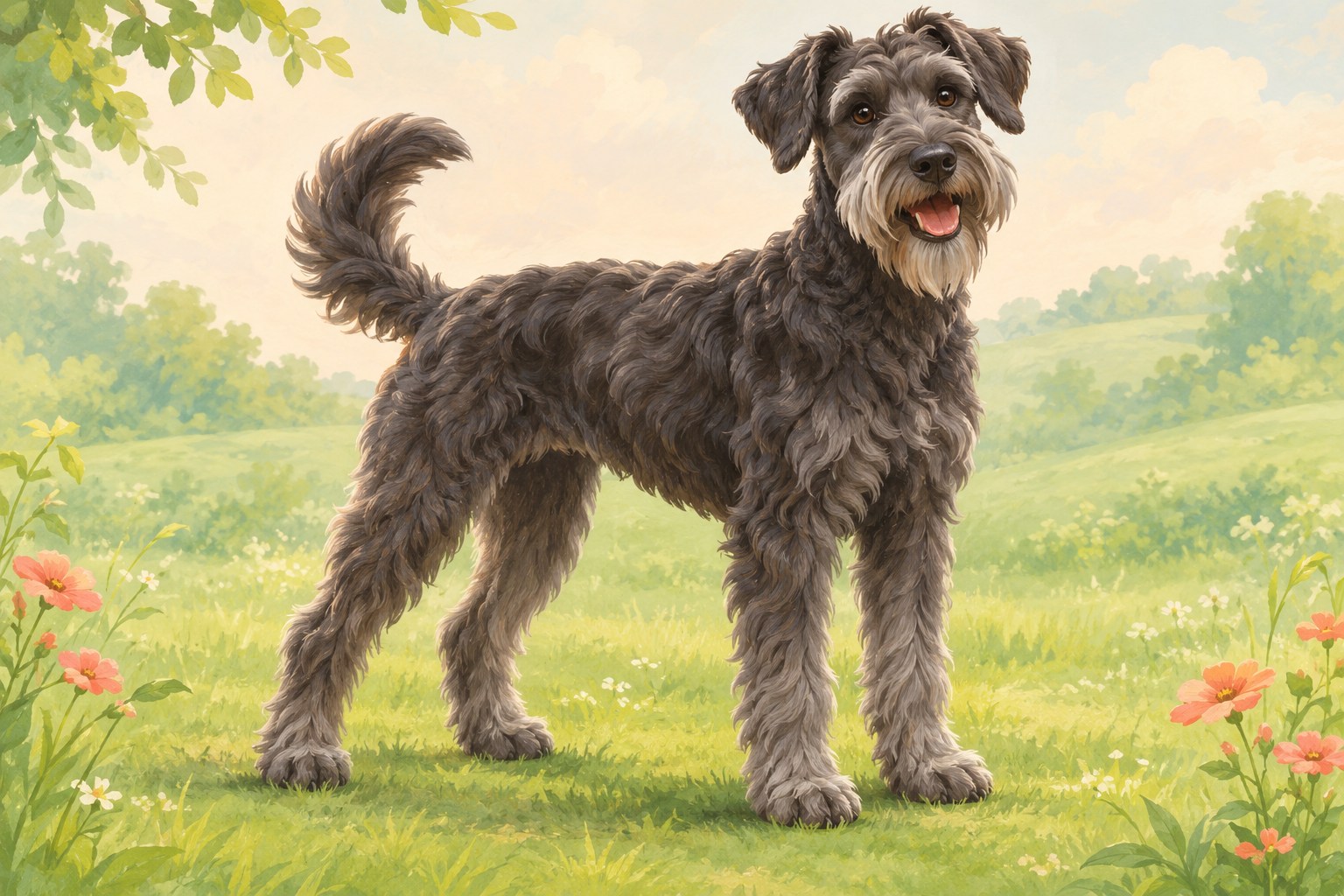
Standard Schnoodle →
Room for movement, training and daily life.
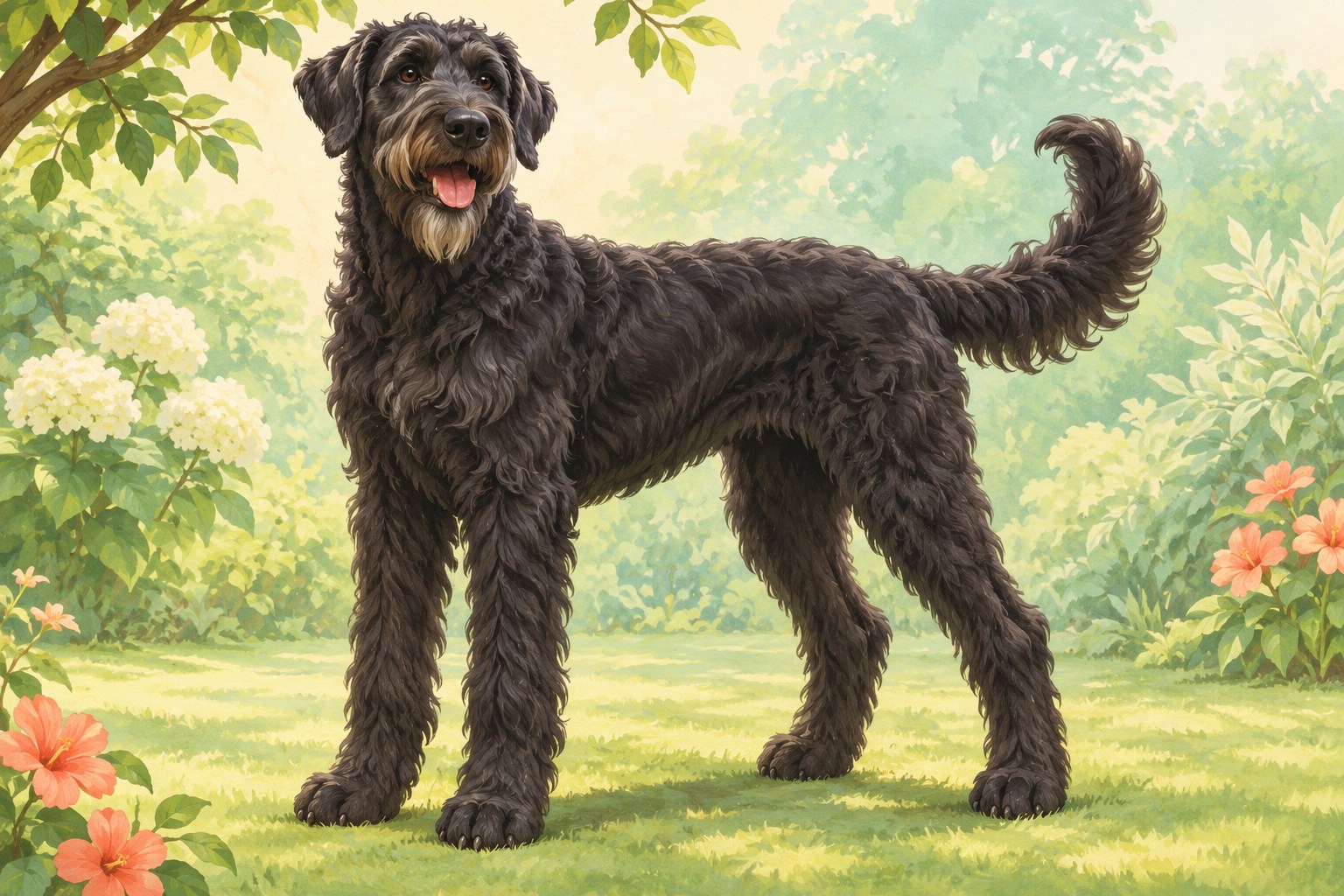
Giant Schnoodle →
A bigger dog, a more substantial commitment.
Independent information, individual dogs. These pages are educational and are not presented as veterinarian-reviewed. Ask your own vet about health, diet and symptoms. Illustrations show possible appearances; they do not establish ancestry, show a breed standard or compare dogs to scale.