


Meet the
Schnoodle.
A Schnauzer-Poodle cross with a wonderfully varied look. Explore the sizes, the care and the questions that matter more than a label.
Schnauzer × Poodle. Many possibilities. One individual dog.
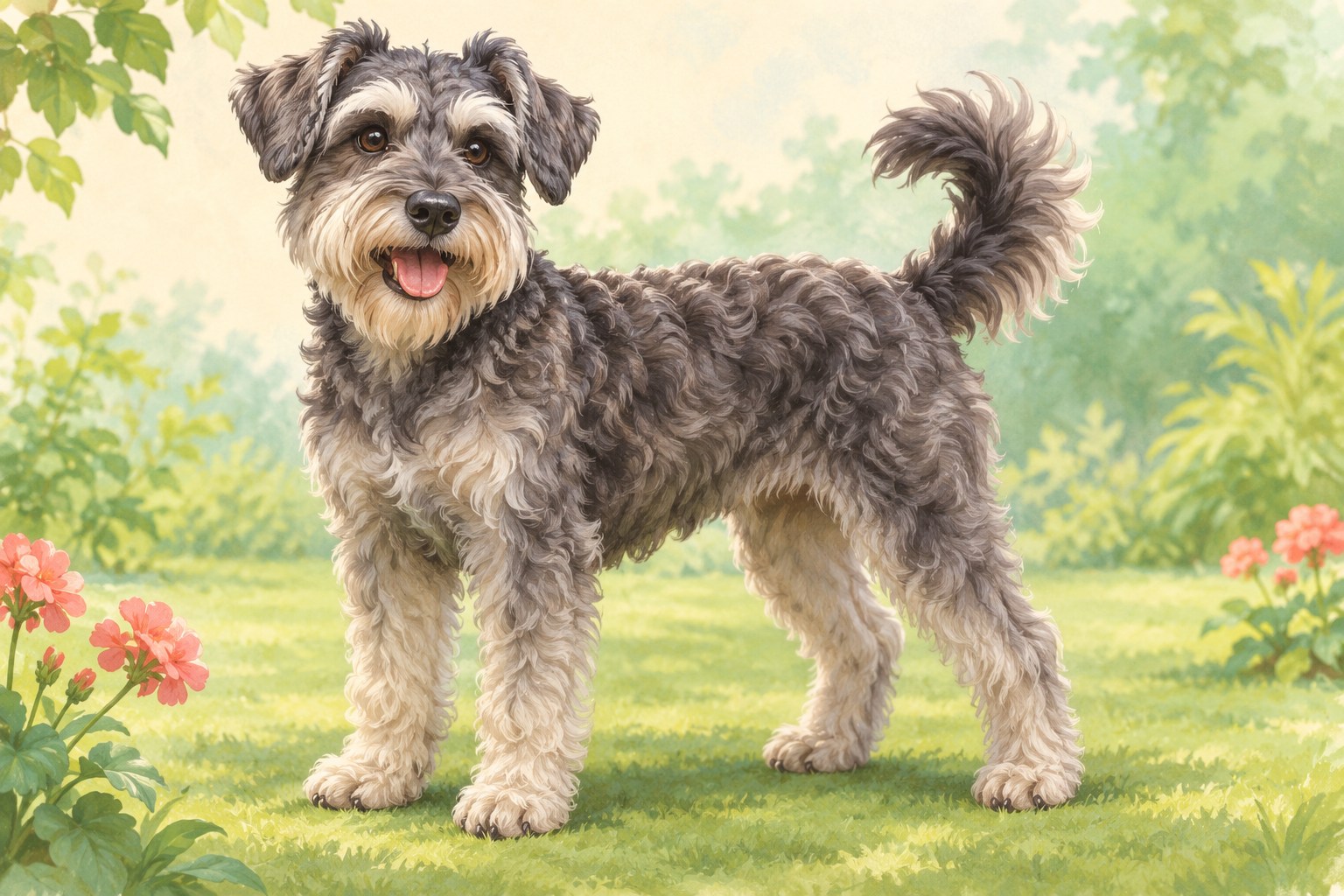
Little companion.
Larger adventure.
Toy, Miniature, Standard and Giant are names you may encounter when researching Schnoodles. They describe different breeding backgrounds and broad size expectations, rather than four universally defined varieties.
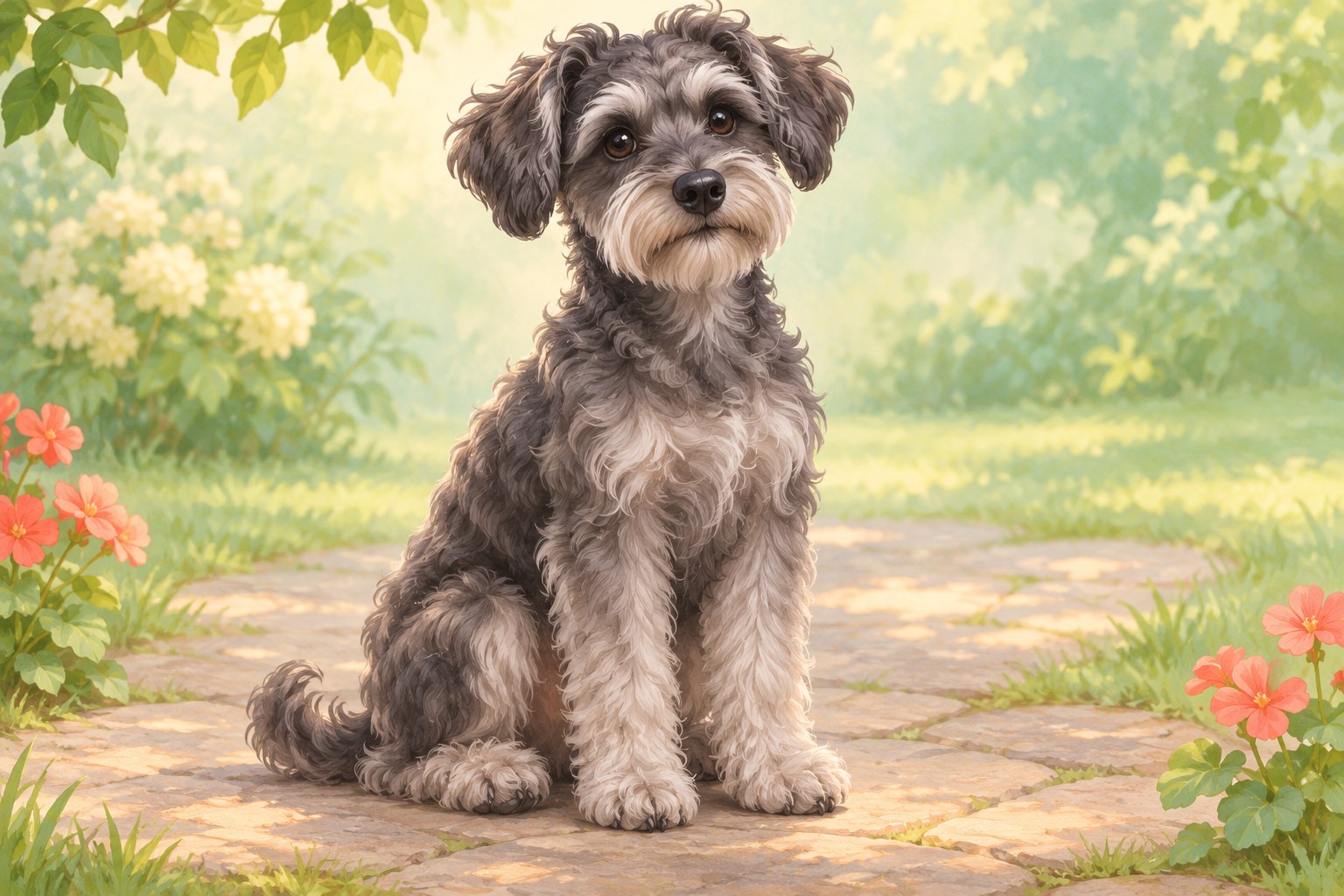
Toy Schnoodle →
Small companion, full-sized care needs.
Miniature Schnoodle →
Compact, curious and ready to learn.
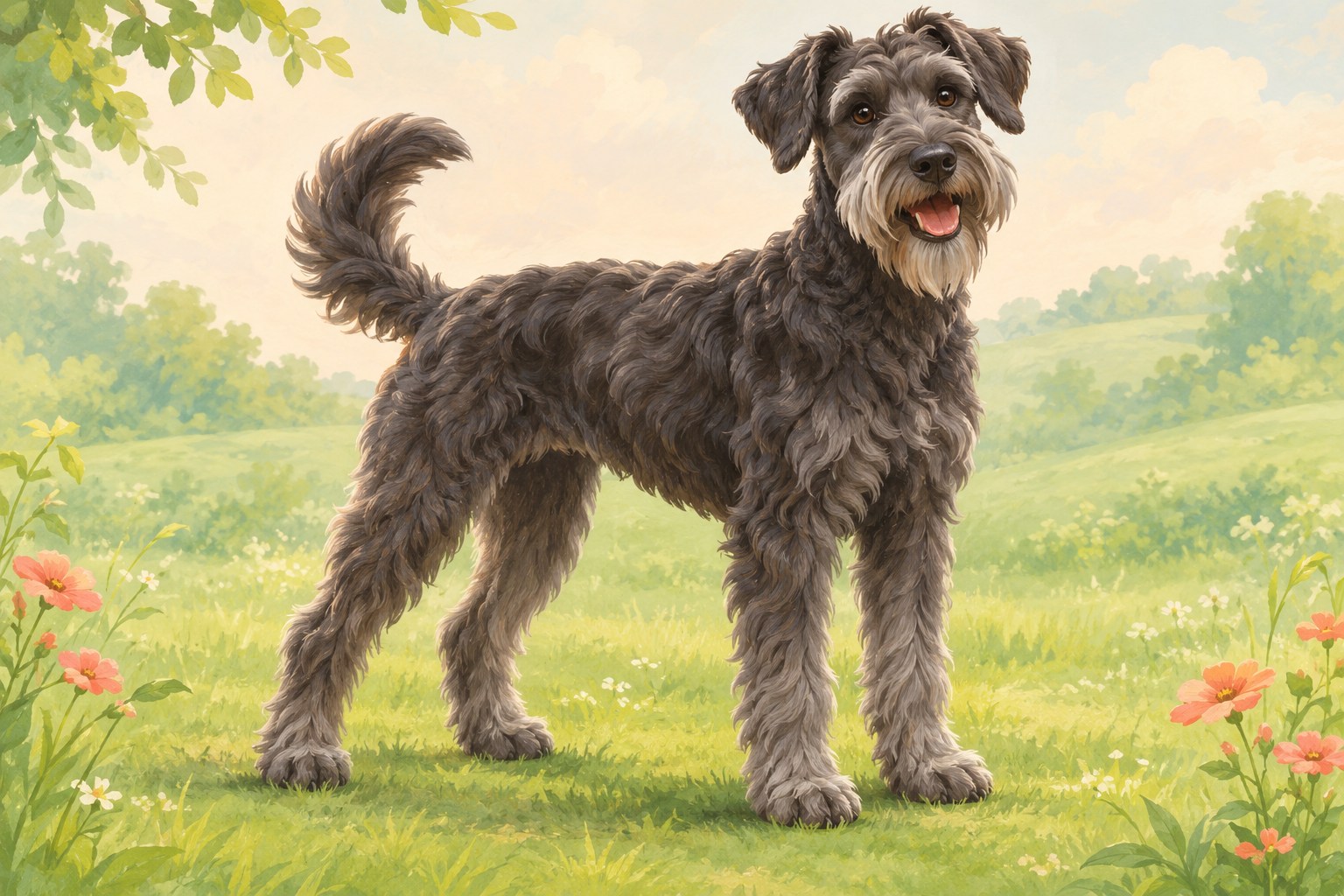
Standard Schnoodle →
Room for movement, training and daily life.
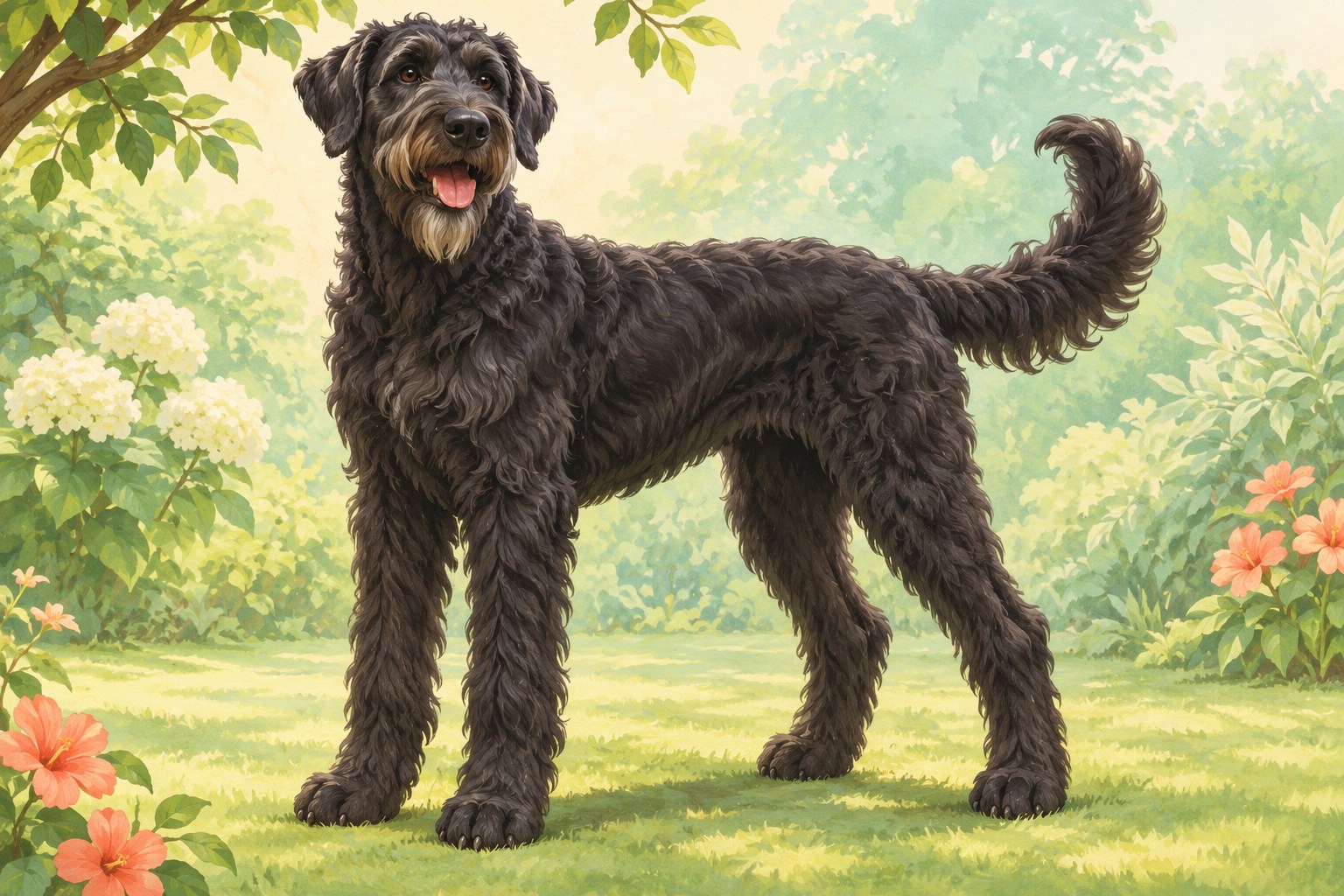
Giant Schnoodle →
A bigger dog, a more substantial commitment.
Start with the parents. Ask which Schnauzer and Poodle sizes are actually involved, their measured adult heights and weights, and whether adult relatives from earlier litters are known. A name or a puppy photograph cannot promise a final size.
Two family trees.
Many possible dogs.
A Schnoodle has Schnauzer and Poodle ancestry. A first-generation cross has a parent from each of those breeds; other pairings may involve a Schnoodle or a backcross. The combination can produce a range of coat textures, proportions and personalities. A curly coat does not prove that a dog will behave like a Poodle, and a beard does not make them a small Schnauzer with an interchangeable care plan.
For someone considering a companion, the useful questions are concrete: how does this dog respond to handling, how confident are they in everyday surroundings, what coat maintenance do they tolerate, and what support will the household need? A responsible breeder or rescue should discuss uncertainty rather than selling a guaranteed personality.
Descriptions such as F1 or F1b explain a breeding relationship. They are not a guarantee of a particular adult size, an allergy-free coat or lifelong good health. Meet the dog, examine the information available and leave room for individual variation.
Useful labels.
Not fixed boundaries.
As one practical UK reference, Purina groups Schnoodles as Toy under 30 cm, Miniature 30-38 cm and Standard above 38 cm at the shoulder. These are its descriptive categories, not an international Schnoodle standard. “Giant” is also widely used for larger-parent crosses and has no shared universal cut-off.
| Label | What to clarify | Everyday consideration |
|---|---|---|
| Toy | Is a Toy Poodle and Miniature Schnauzer involved? What are their actual measurements? | Safe handling, secure equipment and a routine that includes normal dog activities. |
| Miniature / Mini | Which smaller Poodle variety and Schnauzer line were used? | Regular coat care, training and opportunities to explore. |
| Standard / Medium | What does “standard” mean to this breeder or rescue? | Transport, adolescent manners and room to rest comfortably. |
| Giant | Is the ancestry Giant Schnauzer and Standard Poodle? What do adult relatives look like? | Large-dog handling, costs and a realistic care plan. |
Height means ground to withers, at the top of the shoulders. Measure equipment for the individual. Body condition and your vet help determine a healthy weight.
“Medium” and “moyen” may appear in adverts too. They do not create another universally agreed Schnoodle variety. Poodle terminology itself varies: the FCI recognises Toy, Miniature, Medium and Standard. Ask which definition a person is using before comparing centimetres.
The coat is only
the beginning.
Keep the coat comfortable
Wavy, curly or more wiry coats need an individual plan. Ask a groomer to demonstrate brushing and combing through friction areas, then practise in short, rewarded steps. Low shedding is not the same as no maintenance.
Make room for a real routine
Plan suitable outings, sniffing, toilet opportunities, quiet rest and company. Choose activities according to age, health and fitness. A small Schnoodle still needs a daily life; a large one still needs to learn how to switch off.
Look past blanket promises
No dog can be guaranteed hypoallergenic, and a cross can inherit health problems from either parent line. Check evidence, ask about appropriate screening and discuss clinical questions with a vet.
Choose a life
you can share.
Imagine the least glamorous day: rain outside, a muddy coat, a meeting starting soon and a dog who still needs a toilet break. Would your care arrangement work? Think about grooming appointments, time alone, access to safe outings, transport and the cost of unexpected treatment. The size that looks best in a photograph is not necessarily the best match for the household.
With children, plan active supervision and a retreat the dog can use without being followed. With other pets, introduce carefully and protect each animal’s space and resources. Neither parent breed nor the crossbreed label guarantees that a particular dog will enjoy every visitor or animal.
Adult rescue dogs can offer a clearer picture of final size than a young puppy. Ask what has actually been observed and what is still unknown. For a puppy, health records, relevant parent-screening results and a transparent upbringing matter more than pressure to reserve quickly.
A little more clarity.
Which Schnoodle size is best?
The one whose individual needs fit your household. Compare handling, grooming, transport and care arrangements rather than ranking the labels. A calm adult dog may suit a household better than a puppy of the supposedly ideal size.
Are Schnoodles hypoallergenic?
No dog can be guaranteed allergy-free. Coat texture or reduced shedding does not eliminate the allergens a dog can produce. Spend time with the actual dog and seek medical advice if allergies matter.
How do I estimate a puppy’s adult size?
Start with the measured adult size and health history of both parents, the wider family and any adult earlier offspring. Your vet can monitor growth. Predictions still have uncertainty; avoid anyone promising an exact final weight.
Is a Schnoodle the same as a Schnauzer?
No. A Schnoodle is a cross with Poodle ancestry. Schnauzers are distinct breeds with their own standards. Our Schnauzer guides are useful background, but the individual cross may have different coat, size and care needs.
Independent information, individual dogs. These pages are educational and are not presented as veterinarian-reviewed. Ask your own vet about health, diet and symptoms. Illustrations show possible appearances; they do not establish ancestry, show a breed standard or compare dogs to scale.